
Preview: Dental crowns are built to last, but their lifespan depends on several important factors. Here’s what affects dental crown treatment longevity, and how you can help your crown last longer.
If you’ve ever needed a dental crown, chances are you asked the same question almost every patient asks us: “How long will this crown last?”
It’s a fair question, though. Getting a dental crown is a big deal for many individuals. It’s like a brand new, custom-made helmet for a tooth that’s been through a lot. It is designed to protect it, make it strong again and give back a beautiful smile. With dental crown treatment, you’re investing in your smile, and obviously, you want to know if you’re looking at 5 years, 10 years or even longer before you’ll have to do it again.
As dentists, the most honest answer we can give is the one you probably hear often: it depends. In general, you can expect a well-made crown to last somewhere between 10 and 15 years with excellent oral hygiene & care. Some might even last more than that. A bunch of things (like how well the crown was made, the materials used, and most importantly, how well you take care of it) play a role in the durability and longevity of dental crowns. Just like a well-built car, it can last for decades but only if you give it regular oil changes, drive it carefully and don’t ignore the warning signs.
We’re breaking this topic into two parts. Stay tuned for next week’s follow-up, where we’ll cover some important elements that were not mentioned at this party. In this blog, we’ll look at what affects crown longevity, how long different types of crowns tend to last and give you practical tips to keep your dental crown healthy for as long as possible.
So, read on…..
What Exactly is a Dental Crowns Treatment?
We’ll break it down for you in the simplest ways possible. As we already mentioned, it’s basically a custom-made helmet for your tooth. It involves placing a custom-made cap, shaped exactly like a tooth, that fits right over your existing tooth. Its job is to cover the whole visible part of the tooth, all the way down to the gum line, to protect it, make it strong and make it look great.
Did You Know?
Studies published in the Journal of Prosthetic Dentistry consistently show that dental crowns remain one of the most predictable restorative treatments in modern dentistry.
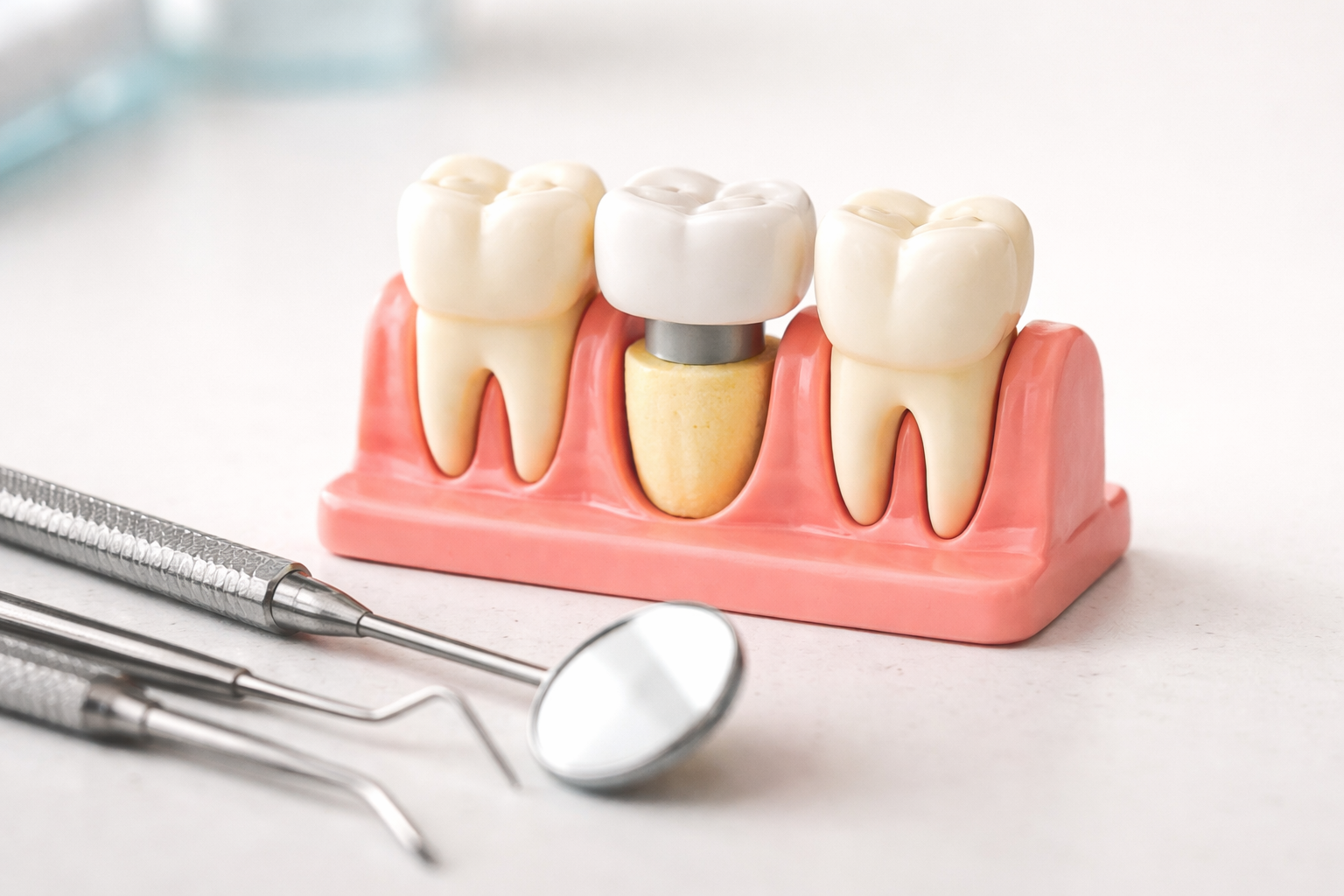
Dental crowns are usually recommended when a tooth can no longer be supported by a regular filling. This can happen because of a lot of reasons like large cavities, cracks, root canal treatment or severe wear over time. We can’t take that chair example again while we’re at it. A small crack in a tooth is like a wobbly leg. You might be able to fix it with some glue (that’s like a filling). But if the whole seat is cracked, the legs are splitting, and it’s about to collapse, glue won’t cut it. You need full reinforcement.
Why Do We Need Dental Crown Treatment?
So, Why Would You Need One? Common reasons we recommend crowns include:
● After a Root Canal: A tooth that’s had a root canal is often more brittle, just like a dried-out tree branch. A crown wraps around it and protects it from cracking under the pressure of chewing.
● Huge Cavities or Old Fillings: If a filling is so big that there’s not much healthy tooth left, a crown holds everything together and prevents the tooth from shattering.
● Cracks and Fractures: If you’ve cracked a tooth, a crown acts like a strong cast, holding the pieces together so the crack doesn’t spread.
● Just Plain Wear & Tear: Over the years, teeth can get worn down from grinding or just from a lifetime of use. A crown can rebuild that lost height and strength.
Because dental crowns cover the entire tooth, it’s like giving that tooth a complete makeover. It can fix:
- A tooth that’s severely stained or discoloured.
- A tooth that’s an odd shape or a little too small.
- A tooth that’s slightly out of line.
So, a crown can both save a tooth from breaking and make your smile look better at the same time.
In a Nutshell
Dentists recommend crowns to:
- Protect a weak tooth (like a root canal)
- Restore a tooth that’;s broken or worn down.
- Improve the look of a tooth that’s damaged or discoloured.
- Support other dental work, like a bridge that replaces a missing tooth.
Because a crown completely covers your tooth, it’s one of the best ways to get the durability you need for eating and the natural look you want.
How Long Do Dental Crowns Usually Last?
The lifespan of a crown varies depending on several factors, although dental professionals expect dental crown treatment to last between 10 and 15 years in normal conditions.
But that’s not entirely true.
Some dental crowns have lasted for 20 years and even more, depending on how well patients care for their oral health and avoid putting too much pressure on their teeth.
One way to look at it is to compare it to something like a pair of high-quality shoes. If they are used normally and taken care of, they could last a long time. But if they are subjected to extreme conditions, they might need to be replaced early.
Dental professionals in Mansfield’s cosmetic dentistry often consider the long-term durability of dental crowns. The aim is not only to give patients something that looks good, but also something that lasts for a long time.
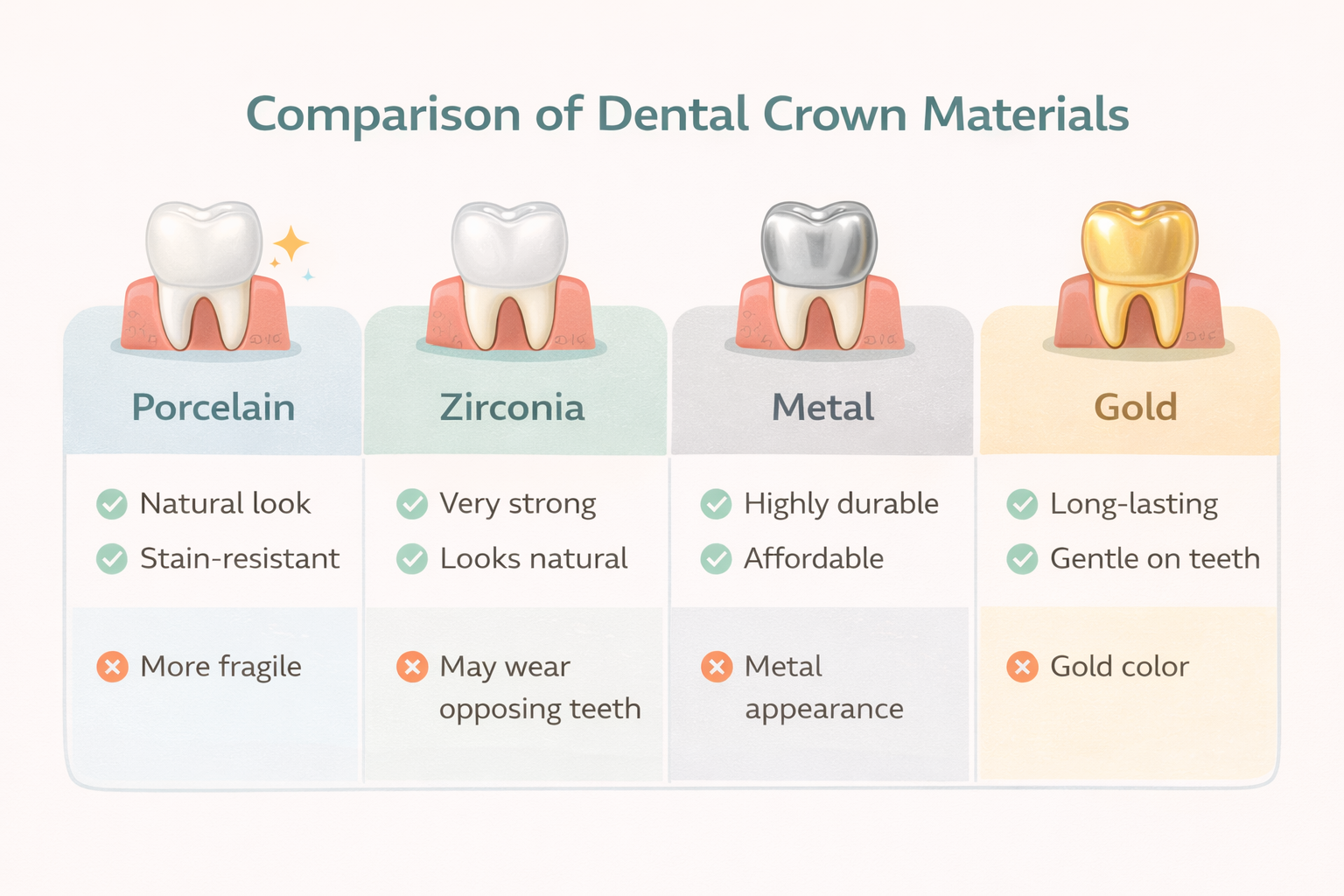
Here’s a general comparison of common crown materials and their expected longevity:
| Crown Material | Average Lifespan |
| Porcelain | 10–15 years |
| Porcelain fused to metal | 10–20 years |
| Zirconia | 15+ years |
| Gold alloy | 20+ years |
Did You Know?
According to research from the American College of Prosthodontists, more than 90% of dental crowns remain functional after 10 years when patients maintain good oral hygiene and attend regular dental checkups.
Types of Dental Crowns & How Long They Last
The material is one of the largest contributors to the lifespan of dental crown treatment. Each type of crown has its own strengths, durability, and aesthetic features.
We can have a closer look at the most popular choices.
1. Porcelain Crowns
Use of porcelain crowns in Mansfield cosmetic dentistry is very common since it closely resembles the colour and translucency of natural teeth.
Pros: best aesthetic match, no metal shows though, great for front teeth, hypoallergenic.
Cons: Can be slightly less durable than metal bass options, may wear down opposing teeth over time if not polished well, not ideal for back molars if you are a heavy grinder.
Although porcelain crowns are excellent in terms of their appearance, they are a little bit delicate compared to a few other materials. They are expected to last 10 or 15 years with proper care, even longer.
2. Zirconia Crowns
Zirconia crowns are considered very strong. It’s a white, metal-free material that’s incredibly strong and sometimes called “ceramic steel”. It offers the look of porcelain with the toughness of metal.
Pros: Fracture resistant, metal-free, good colour match, biocompatible (gentle on gums). Due to their strength, the availability of zirconia crowns is usually suggested to be used on molars or on patients who grind their teeth.
Cons: Can be slightly more opaque than pure porcelain (less translucent), harder than natural tooth enamel.
Most dentists have regarded zirconia as one of the toughest alternatives that can be used in dental crown treatment and have lasted over 15 years.
3. Porcelain-Fused-to-Metal (PFM) Crowns
These crowns are made up of a very strong metal base and a very aesthetic porcelain coating.
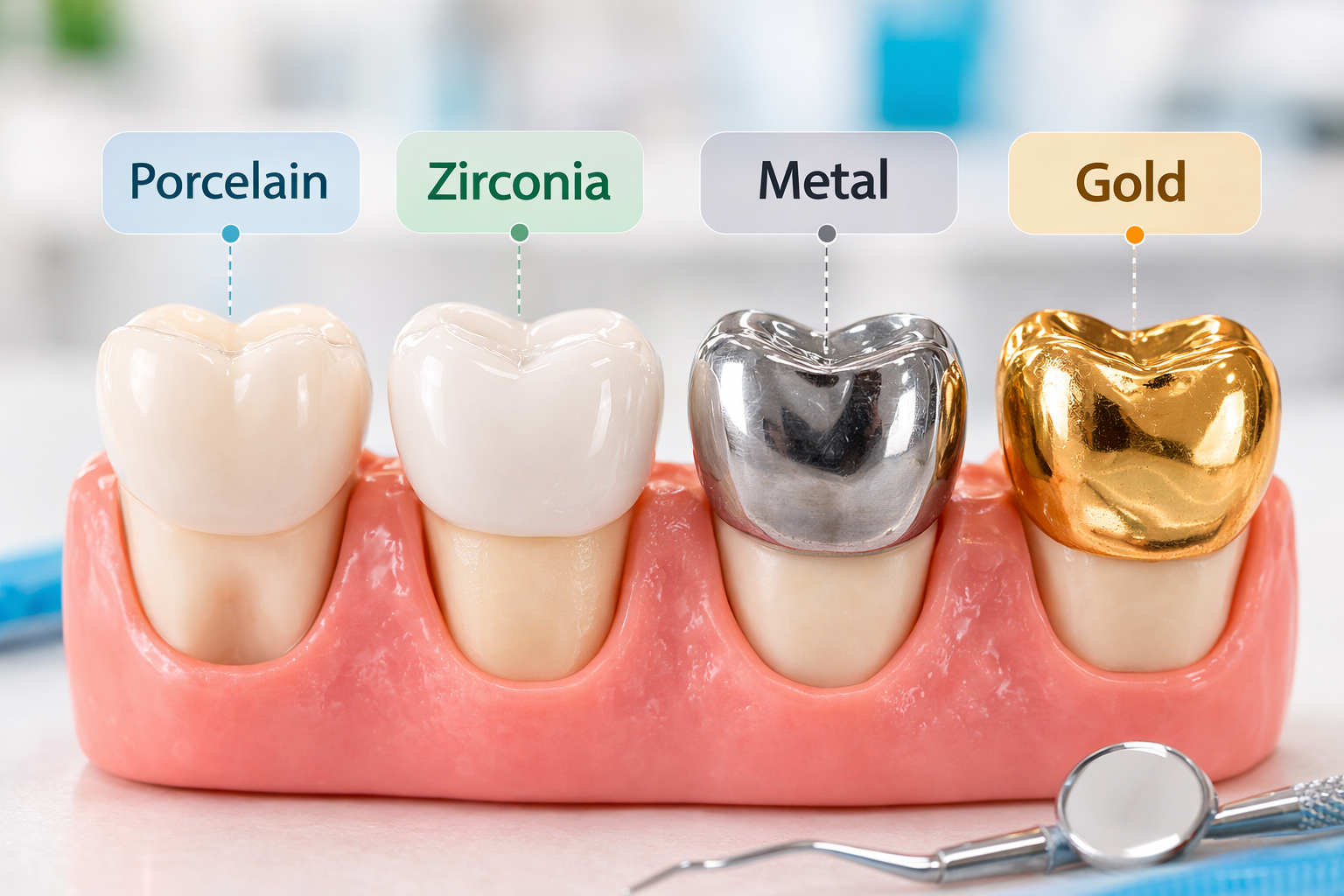
Pros: It offers the benefit of strength without necessarily appearing artificial. When oral habits and bite pressure are taken into consideration, many of the porcelain-fused-to-metal crowns have durations of 10 to 20 years.
Cons: Over time, gums may recede slightly and reveal a dark metal line at the crown’s edge; the porcelain layer can sometimes chip off the metal underneath.
They have served for decades and still continue to be a good option in the field of restorative dentistry.
4. Gold Crowns
Gold crowns are not so popular nowadays because nobody wants a shiny gold tooth when they smile. But if we’re talking pure longevity, gold is still undisputable.
Dentists have observed that gold crowns may last 20 years or longer and in some cases there are cases that they can last several decades.
Pros: Their key beneficial factor is that gold is soft on dental teeth, and it is very hard to crack or break. Extremely gentle on surrounding teeth, it requires the least amount of tooth removal and rarely chips or fractures.
Cons: The gold colour is a dealbreaker for most people, purely functional, not cosmetic, rarely used for visible front teeth. It usually lasts 20-30+ years. Even sometimes they outlast the patient (yikes!)
Factors That Affect Dental Crown Treatment Longevity
Even a crown made from the strongest materials can fail prematurely if certain conditions are present. This is the reason dentists always stress that dental crown treatment is more of “what is maintained” instead of the actual crown itself.
The longevity of crowns and their actual life is determined by several factors:
A.) Oral Hygiene
Even though a crown shields the visible part of your tooth, the natural tooth structure underneath can still be vulnerable to decay.
When the plaque accumulates around the gum line at the junction of the crown and the tooth, bacteria can cause slow decay of the crown margin. This can be prevented by regularly brushing, flossing and cleaning the teeth.
B.) Bite Alignment
Disproportional bite pressure may lead to higher absorption of force by some of the teeth than by others. A crown that sits even slightly too high can wear out faster due to uneven bite pressure.
C.) Teeth Grinding (Bruxism)
Crowns may be subjected to tremendous pressure when grinding or clenching teeth. This force can result in cracking or loosening of crowns with time.
Night guard is usually healthy for patients who grind their teeth to preserve their natural teeth and the crowns.
D.) Diet and Habits
Some practices can reduce the life of crowns,e.g.:
- chewing ice
- biting hard candies
- opening packages with teeth
- more often than not, frequent intake of hard foods.
Crowns are powerful and not unbreakable.
E.) Quality of Placement
Experience and ability of the dentist used in the Dental Crowns Treatment are also factors in long-term success. A precise fit of the crown, correct bite set, and quality material are all reasons to understand the increased durability.
Mansfield cosmetic dentist experts tend to refer to the digital scanning and accurate fabrication techniques to enhance better fitment and durability of crowns.
Conclusion
While understanding the average lifespan of a dental crown treatment is a great starting point, knowing how to protect that investment is just as important. In next week’s follow-up blog post, we’ll dive deeper into the practical side of crown care. We’ll cover the key signs that your dental crown might be getting old or falling, simple daily habits that can add years to its life, and we’ll also bust a few common myths that usually confuse patients.
Trust Your Smile to the Experts at Delatite Dental in Mansfield, VIC
If you have any concerns about a current crown or want to explore your options for restoring a damaged tooth, don’t wait.
Contact Delatite Dental today to schedule your consultation.