
Bad breath is something almost everyone experiences occasionally. It’s a normal part of daily life for many people. Things like drinking coffee, eating strong-smelling foods like garlic, or just waking up can temporarily make your breath smell unpleasant. For temporary bad breath, simple actions like brushing your teeth or drinking water are usually sufficient to freshen your breath. But what of the smell keeps coming back? Even if you have brushed your teeth and used mouthwash, chew gum if you are out. Doing all the usual things to freshen breath, but still having the smell return shortly after. If you relate to any of these problems, it’s time to dig a little deeper instead of completely relying on mints and mouthwashes.
Chronic bad breath (called halitosis) is usually a sign of something serious going on inside the mouth or body. Studies show that the vast majority (80-90%) of long-term bad breath comes from problems inside the mouth. This makes dental issues much more likely than stomach problems. Although many people think bad breath comes from the stomach, digestive issues are actually responsible for only a small percentage of cases.
Now the good news is that bad breath is usually treatable once you find the real cause behind it. In this guide, we’ll look at the most common dental causes of persistent bad breath. We’ll also look at the everyday habits that can make it worse or may be linked to a medical condition.
What Causes Persistent Bad Breath?
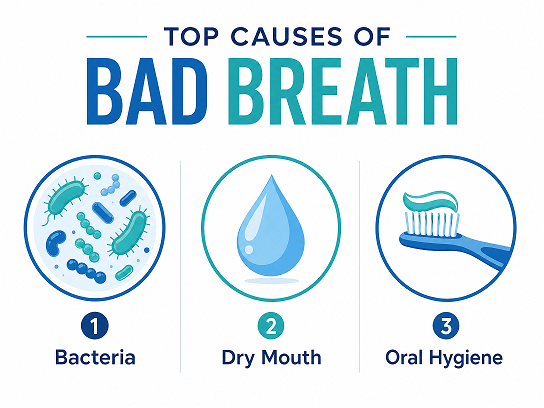
Bad breath always has a specific cause. The primary cause of persistent bad breath is bacteria that naturally live in the mouth. These bacteria are the main source of the problems in the majority of cases. Mouth bacteria consume tiny bits of food left behind, dead skin cells, and protein in saliva and plaque. This feeding process is what starts the odor problem in the first place. When bacteria digest these materials, they produce smelly gases known as volatile sulfur compounds (VSCs). These gases are what create the unpleasant smell. The VSCs (sulfur compounds) are the actual chemicals that cause the bad smell people notice.
Everyone has bacteria living in their mouth, which is completely normal. Simply having bacteria is not what causes bad breath, but it starts when bacteria build up in hard-to-clean areas. When bacteria collect in areas like between teeth or the tongue, or when conditions allow them to grow too quickly. These situations create excess smelly gases.
For example:
- Plaque left along the gumline
- A thick coating on the tongue
- Food trapped between teeth
- Untreated gum disease
- Dry mouth caused by reduced saliva
So simply covering smells with mints and mouthwashes does not remove these bacteria. If the underlying cause is not addressed, the odour is likely to return.
What are Oral & Dental Problems That Cause Bad Breath?
In the majority of cases, the real reason for persistent bad breath can be easily found by dentists during a routine check-up. A professional exam usually reveals many problems that can be ignored by patients. Many everyday dental problems create ideal conditions for bacteria to grow and produce smelly gases.
A. Poor Oral Hygiene
Brushing twice daily is important, but it is not enough on its own to prevent bad breath. There are other important steps needed for complete oral care. During normal eating, small pieces of food get tucked between teeth and along the gums. These particles stay there if not removed properly. When food particles are left behind and not removed, bacteria start breaking them down right away. The feeding process quickly leads to odor production.
Bacteria when mixed up with saliva over time, it creates a sticky layer called Plaque on the teeth. Plaque keeps forming constantly if it is not cleaned properly, and starts forming a thick and harder layer (tartar). This gives bacteria even more protected spaces to multiply and produce smells. So applying your full power in brushing your teeth will only harm your enamel; it won’t get rid of bacteria, and it can actually cause damage to your gums and enamel.
Effective oral hygiene is all about cleaning all areas properly and gently with proper techniques. Cleaning between teeth with floss or other tools is just as important as brushing. Toothbrush bristles cannot reach the tight spaces between teeth. Research shows that the brush itself only cleans about 60% of the tooth surfaces. The remaining 40% between the teeth stays uncleaned without flossing. When you skip cleaning between the teeth, bacteria have safe places to hide and keep producing smelly gases.
B. Tongue Coating
The tongue may be one of the main reasons for bad breath; it contributes highly to the issue. The easiest way is to check your tongue in the mirror. A white, yellow, or fuzzy layer on the back of the tongue is actually the buildup of bacteria, leftover food, and dead skin cells. The tongue has a rough texture with many tiny bumps and grooves (papillae), unlike the smoother surface of the teeth. These grooves make it easier for bacteria to hide. The small grooves in the tongue are very good at catching and holding onto bacteria and debris. As you move towards the back of the tongue, there is less oxygen present, and this creates a different environment deeper in the mouth. Many pathogens causing bacteria actually prefer and grow better in areas with little oxygen. This is why the back of the tongue is a common problematic spot.
Because of the low oxygen and trapped bacteria, the back of the tongue is one of the leading causes of long-term bad breath. Gently cleaning your tongue every day using a tongue scraper or your toothbrush can greatly reduce the bacteria buildup and improve breath. A lot of people are diligent about brushing their teeth but forget to skip cleaning their tongue, which leaves a major source of bad breath untouched.
Did You Know?
Several studies have found that cleaning the tongue can noticeably reduce the sulphur compounds responsible for bad breath, particularly in people without advanced gum disease.
C. Gum Disease (Gingivitis and Periodontitis)
Persistent bad breath is one of the first noticeable warnings that gum disease may be developing. In a healthy mouth, gums form a tight seal around the teeth. This seal helps prevent bacteria from getting onto the areas below the gumline. If plaque is not removed regularly, it irritates the gums and causes inflammation. This is the beginning of gum problems. The initial, milder stage of gum disease is called Gingivitis. It is reversible with good care, but it should not be ignored, and the common signs include:
- Bleeding while brushing
- Red or swollen gums
- Tender ness
Bad breath that does not improve over time
When gingivitis is not treated, it can advance into a more serious condition called periodontitis, and this stage involves more serious damage. In periodontitis, the gums start to separate from the teeth. This created deep pockets where bacteria can hide, and these pockets are very hard to reach and clean with normal brushing or flossing. Bacteria can thrive in these protected spaces and can keep multiplying and releasing smelly sulphur gases all day long. This leads to constant bad breath. A common misconception is that a serious gum disease always causes pain. But in reality, it can even progress quietly without much pain, and sometimes bad breath is the only clue. Persistent bad breath should never be ignored, particularly when you have bleeding gums.
D. Dry Mouth (Xerostomia)
Saliva does more than just make your mouth comfortable and moist. It plays several protective roles in oral health. It naturally rinses away leftover food, balances mouth acidity, keeps bacteria under control, and helps prevent tooth decay. If saliva flow drops, bacteria can grow more freely because they are not being washed away or controlled as effectively, which leads to more odour-causing activity. With less saliva, bad breath tends to get stronger and more persistent. Simply not drinking sufficient water throughout the day is a frequent and easily fixable cause of dry mouth (dehydration).
Many common medicines, such as those for blood pressure, allergies, or depression, can reduce saliva production as a side effect. Breathing through the mouth instead of the nose dries out the oral tissues quickly. This is common during sleep or with nasal congestion.
Snoring: Snoring often leads to mouth breathing at night, which significantly reduces saliva and contributes to morning bad breath.
Diabetes: Uncontrolled diabetes can cause dry mouth due to changes in fluid balance and increased blood sugar.
Cancer Treatments: Radiation therapy and certain chemotherapy drugs frequently cause dry mouth as a side effect.
Autoimmune Conditions such as Sjögren’s Syndrome: Conditions like Sjögren’s
Syndrome directly attacks other glands that produce saliva, leading to chronic dry mouth.
Age also plays a part, as older adults are more likely to experience dry mouth, but it is not caused by age alone. Several other factors are also responsible. Many medications commonly prescribed to older people have dry mouth as a side effect.
Symptoms of Dry Mouth
These are the common signs of dry mouth to look out for:
- A common complaint is that the mouth feels ticky or pasty rather than naturally moist.
- Dry mouth often makes it harder to swallow food like bread or crackers with hot liquid.
- People with dry mouths feel thirsty more often, even after drinking water.
- Lips may become dry, chapped, or cracked due to reduced saliva.
- The tongue can feel rough, dry, or look coated because of insufficient moisture.
- Persistent bad breath is one of the most noticeable symptoms of chronic dry mouth.
Drinking more water can give short-term relief, but if dry mouth persists, finding and addressing the root cause (medication, medical conditions, etc.) is important for lasting improvements.
How Delatite Dental in Mansfield Is Your Go-To Destination for Dental Issues
So far, we have learned how bad breath can be a symptom of something serious, so finding the proper cure is very necessary. Delatite Dental in Mansfield focuses on a thorough check-up for every single patient. During the examination, we will assess your teeth, gums, tongue, existing dental work, and overall oral health. The main reason for this detailed analysis is to identify potential causes of persistent bad breath or any hidden dental issues.
Whether you are dealing with plaque or tartar buildup, gum disease, tooth decay, dry mouth, or another dental condition, our team can recommend the most appropriate treatment for you. We recommend booking early dental checkups as they could help uncover the underlying causes and get your oral health back on track.
Frequently Asked Questions (FAQs)
Q.1. Why does my breath still smell after brushing my teeth?
Brushing only helps in cleaning the outer surfaces of your teeth. However, the problem could be arising because of the existence of bacteria on your tongue, gum diseases, food stuck in your teeth, cavities, or because of dry mouth.
Q.2. Can gum disease cause bad breath even if my gums don’t hurt?
Yes. Both early and moderate gum disease may develop without any pain at all. Continuous bad breath and bleeding gums are sometimes the earliest signs that something is wrong.
Q.3. Is there any relation between poor oral hygiene and bad breath?
No. Poor oral hygiene is one of the major causes of bad breath, but there are other things, such as dry mouth, sinus infection, tonsil stones, acid reflux, certain medications, and health problems, that can lead to bad breath.
Q.4. Do tongue scrapers help in reducing bad breath?
Yes. Scraping off the bacterial film on the tongue can help in getting rid of the sulphurous compounds that cause bad breath, especially if tongue coating is the primary cause.
Q.5. Could a cavity be the reason for bad breath?
Yes. Cavities contain food and bacteria that can make your breath foul-smelling.
Q.6. Should I visit a dentist or a general practitioner first?
Since most persistent bad breath starts in the mouth, a dental examination is usually the best first step. If no dental cause is found, your dentist may recommend seeing your GP.