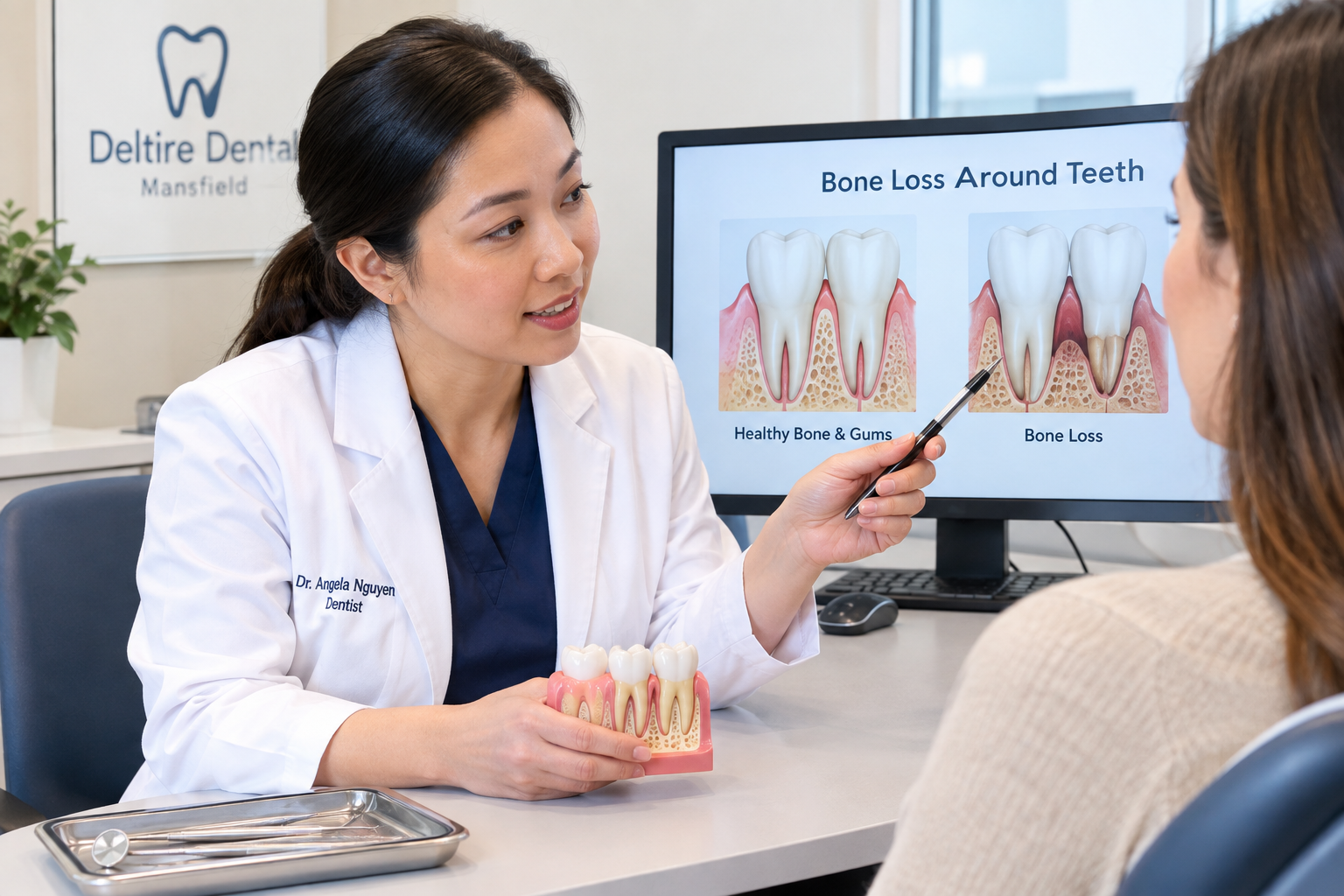

Teeth replacement solutions can mean different things depending on how many teeth are missing and what kind of results you want. Here’s a simple guide to the main options, what they do, and how to choose the right one for yourself.
According to Australian Oral Health data, adults aged 35-45 have an average of several missing teeth due to decay, gum disease, or injuries. But look at the bright side: The dentistry industry has come so far that your teeth replacement solutions might actually offer better-looking teeth than the originals. Many people initially dismiss a missing tooth as no “big deal”, especially if it’s not looking very serious. It becomes a bit tricky to chew stuff and smile in photos. Some foods, like apples, corn on the cob, or tough meats, become really hard to chew. This can also bring on long-term consequences that many patients don’t know about. This is where teeth replacement solutions come in.
But …. It’s not just one treatment. It involves multiple ways to replace missing teeth, and each option works differently. The treatment is personal, and it depends on the needs, lifestyle, and long-term goals of that person. For patients exploring options in Mansfield, VIC, the most common question is probably “What’s the best option for me?” Let’s break it down.
What Are Teeth Replacement Solutions?
Teeth replacement solutions refer to different dental treatments designed to restore missing teeth both functionally and aesthetically. The term “teeth replacement solutions” is an umbrella term covering multiple treatments. There’s more going on beneath the surface than just appearances. Replacing teeth can bring back your ability to chew the way you used to by breaking it down properly before swallowing.
Teeth replacement solutions help:
- Restore proper chewing
- Maintain bite alignment
- Prevent neighbouring teeth from shifting
- Support facial structure
- Improve Confidence
Your teeth tend to hit against each other in a specific way. A missing tooth throws that alignment off. Replacement solutions help keep your bite balanced so your jaw closes correctly and your teeth meet evenly. Teeth naturally drift into a space over time. A replacement tooth acts like a placeholder, keeping the teeth on either side from sliding out of position and creating new problems.
The most common options include:
- Dental Implants
- Dental Bridges
- Dentures
- Dental Crowns (in some cases)
Each treatment comes with its own benefits, limitations and ideal use cases.
Main Teeth Replacement Options
Let’s get into the options most patients in Mansfield, VIC consider:
1. Dental Implants
Dental implants are usually considered the most stable long-term solution. They involve placing a small titanium post into the jawbone, which acts like a natural tooth root. Later, a crown is placed on top to complete the restoration.
The reasons why people are attracted to implants:
- Fixed and stable
- Natural appearance
- Long-lasting
Research indicates that dental implants are one of the most effective and long-term dental treatments, as they continue to last a lifetime with proper care.
2. Dental Bridges
In a dental bridge, one or more missing teeth are replaced by attaching an artificial tooth. It’s anchored to the teeth on either side. It is a permanent alternative, which is why it does not come in and out like dentures.
The reason why people pick bridges:
- Treatment is faster than that of implants.
- Fixed in place
- More small gaps.
3. Dentures
Dentures are removable devices used to replace multiple missing teeth or even full arches. Dentures developed nowadays are much more natural and comfortable than the old ones.
The reason why people prefer dentures:
- Appropriate for multiple missing teeth.
- Non-surgical option
- More convenient starting point.
4. Dental Crowns
Although crowns are not a complete substitute solution, they are also important in situations where a tooth can be saved. A damaged tooth is covered and protected with a crown, which provides him with functionality and aesthetics.
Teeth Replacement Solutions Compared
| Option | Best For | Fixed or Removable | Longevity | Key Benefit |
| Implants | Single or multiple missing teeth | Fixed | Very long‑term | Stability & natural feel |
| Bridges | One or a few missing teeth | Fixed | 10–15+ years | Faster solution |
| Dentures | Multiple missing teeth | Removable | 5–10 years | Accessible & flexible |
| Crowns | Damaged teeth (not missing) | Fixed | 10–15 years | Tooth preservation |
What Affects the Best Choice for You?
The decision between different tooth replacement solutions does not mean picking the “best one” in general. It involves choosing what is “best” for you.
Some factors would be:
Number Of Missing Teeth
One missing tooth can be a perfect fit in the case of an implant or bridge, whereas several missing teeth would be perfect in the case of dentures.
Bone Health
In the case of implants, bone health is required. Sometimes, it might be advised to conduct some other procedures, such as bone grafting.
Lifestyle
There are those who like permanent solutions, and others are at ease with the portable ones.
Budget And Timeline
The various options are different in their prices and course of treatment.
All these factors are normally considered by dentists in Mansfield, VIC, prior to prescribing a treatment plan.
What Does the Treatment Process Look Like?
A majority of teeth replacement solutions have a similar journey:
- Consultation and examination
- Scans or impressions of the digital images.
- Treatment planning
- Friendliness (implant, bridge, denture fitting, etc.)
- Adjustments and follow-ups
Depending on the nature of the dental piece (bridge or denture), it can be completed in a few weeks (bridges) or a few months (implants).
How Long Do Tooth Replacement Solutions Last?
Longevity depends on the option chosen and how well it’s maintained.
Implants have the potential of lasting decades and even a lifetime.
Bridges and crowns have a lifespan of approximately 1015 years.
Normal denture life span is 5-10 years, then they require fixing or replacement.
How Long Do Tooth Replacement Solutions Last?
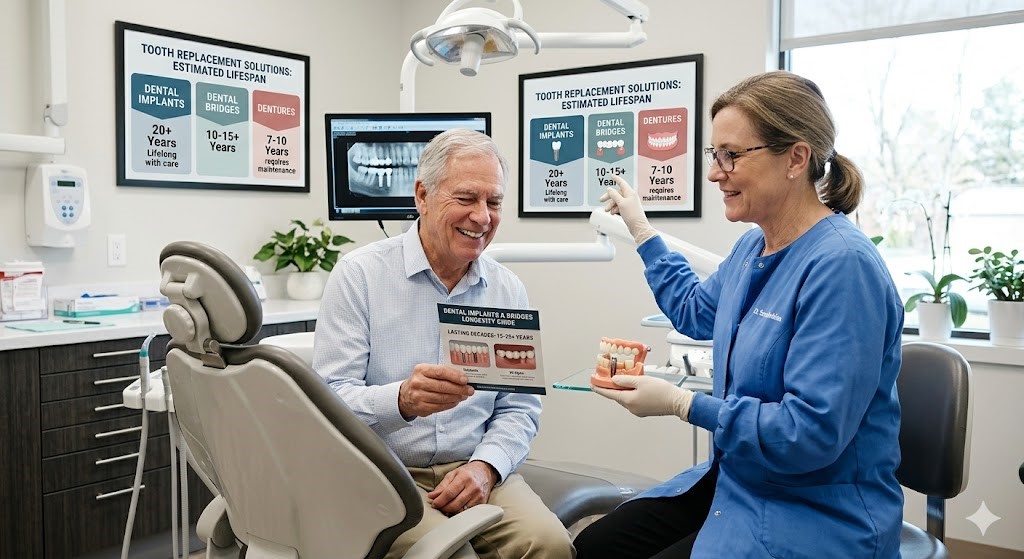
The duration of life will be based on the type of option taken and the manner in which it is maintained.
- Implants can last decades or even a lifetime.
- Bridges and crowns usually last around 10-15 years
- Dentures typically last 5-10 years before adjustments or replacements.
How to Make Your Replacement Last Longer
Which option you prefer, it does not matter; care makes a tremendous difference.
- Stay hygienically clean in the mouth.
- Have regular dental examinations.
- Do not use unnecessary force (such as chewing ice)
- Use protective appliances in case you grind your teeth.
Having small habits can hugely increase the lifespan of your preferred teeth replacement solutions.
Conclusion
Choosing the right teeth replacement solutions is all about understanding what best fits your lifestyle, comfort and long-term goals. Whether you’re dealing with a single tooth or trying to find better solutions, getting the proper guidance is important.
If you’re exploring your options in Mansfield, VIC, the team at Delatite Dental can help you find the best for your situation. Contact us today to book your first consultation.
Frequently Asked Questions (FAQs)
Q.1. Are dental implants the best teeth replacement solutions?
The best teeth replacement solutions vary from person to person. Dental implants are typically the most stable long-term option, but bridges and dentures can work well, too, depending on the circumstances.
Q.2. Dental implants versus dentures: Which is better?
Dental implants are permanent and feel more like natural teeth, whereas dentures can be removed/unattached and are typically best for many missing teeth. Whether you should get one or the other depends on your oral health and your preferences.
Q.3. How long will it take to get a new tooth?
It may take a different amount of time depending on what type of tooth replacement option you are getting: dentures or bridges could take anywhere from several days to several weeks; however, implants can take several months due to the time needed for you to heal after they are placed.
Q.4. Do tooth replacement solutions look natural?
They do. Tooth replacement solutions are built to match closely both in colour and shape, as well as function with your natural teeth.
Q.5. Is it necessary to replace a missing tooth?
While not necessarily a priority, you should go ahead and replace your missing tooth in order to avoid developing further problems such as teeth shifting, bite issues, or bone loss.