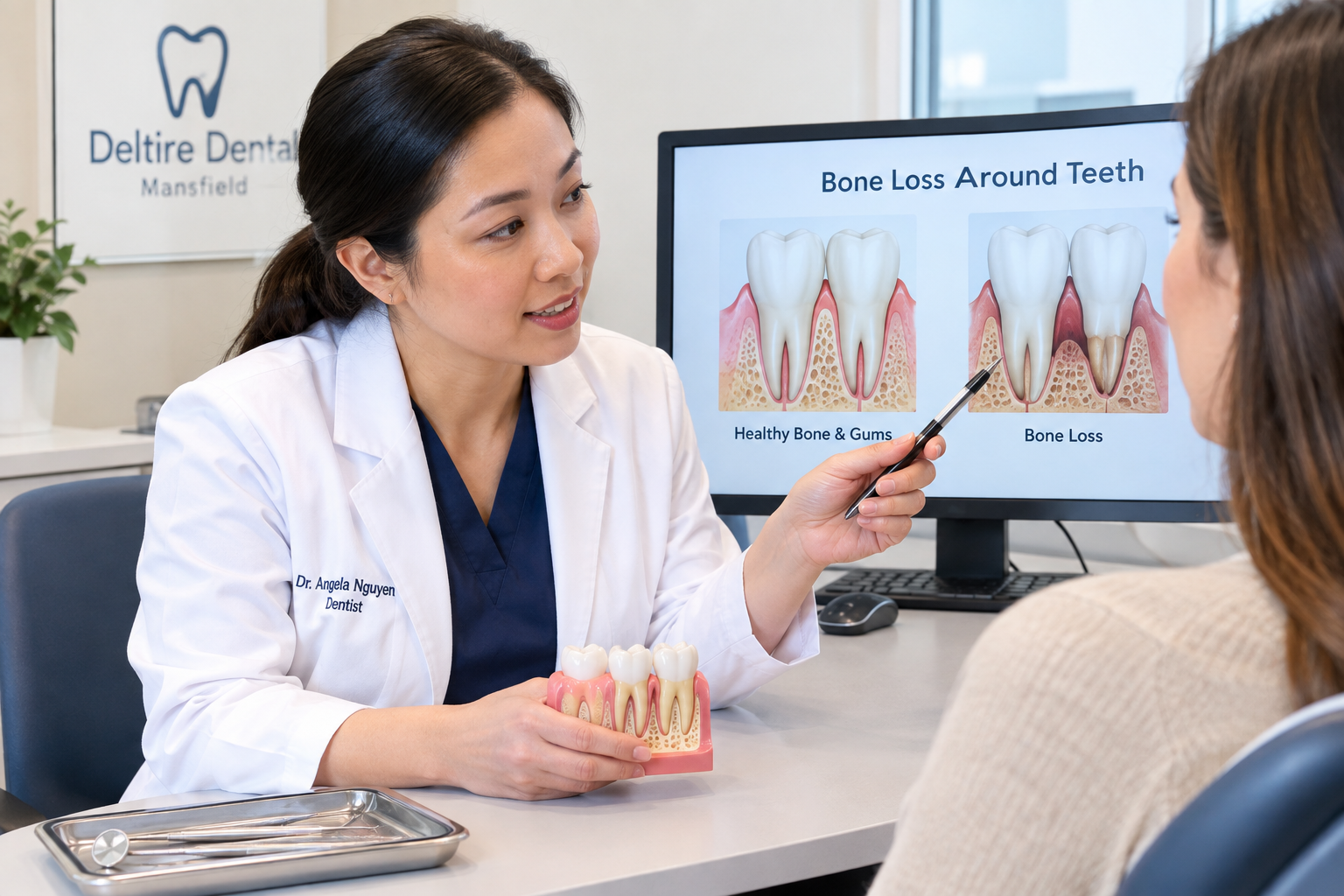

Preview: A dental check-up & clean is one of the simplest ways to avoid dental problems. Learn about what the visit involves and how it helps protect your smile over time.
Would you rather spend 30 minutes in a dentist’s chair twice a year or deal with a surprise $2000 procedure because you skipped those appointments? Yeah…..we thought so. What if we told you that one simple appointment twice a year could save you thousands of dollars in dental work? A dental check-up & clean is one of those appointments. Unlike an emergency dental visit because of sudden pain in the middle of the night, a dental check up & clean is predictable and peaceful. You don’t need to panic as it’s just a simple non-surgical process. And these small efforts of going to routine appointments can prevent big, painful, and stressful dental emergencies down the road.
Healthdirect Australia indicates that a dental check involves a thorough examination of teeth, gums, lips, tongue, mouth, and saliva, along with preventive care like fluoride, polishing, etc. It also recommends regular check-ups every 6 to 12 months.
Instead of waiting for something to break or hurt, a regular check-up lets you catch issues early on. And it’s a participatory process; no complications, expensive procedures, and time-consuming routines.
What is a Check-Up & Clean?
A check-up & clean is a routine dental appointment that involves oral examination with a professional cleaning. A check-up is the process where dentists take a look at your teeth for problems like cavities, bite issues, swelling or gum bleeding, cracks, and any other abnormality in the mouth. And cleaning is the part where plaque, tartar, and surface stains are removed more thoroughly. Plaque hardens into tartar over time, and only a dentist or hygienist with special tools can scrape it. Surface stains from coffee, tea, or tobacco are also polished away.
The Australian Dental Association assures that dental hygienists help remove tartar, plaque, and stains while also educating patients on ways to prevent build-up and cavities.
Some people might think the whole point of cleaning is to make teeth look whiter and feel smoother for a few days, but it’s not done for cosmetic purposes only. A dental check-up & clean is like getting oil changed in your car or replacing the air filter in your house. It stops the small problems from turning into big ones, and it not only protects your teeth but also protects everything in your mouth.
Did you know?
AIHW data shows that in 2021, 57% of Australian adults had made a dental visit in the previous 12 months, and 66% had visited for a check-up rather than a dental problem.
What Happens During a Check-Up & Clean?
A regular dental check-up & cleaning process usually follows a pretty simple and similar pattern in general. But there can be different issues with different patients, so dentists usually adjust the steps based on patients’ specific needs.
A. The Examination
The appointment always starts with the proper examination, including the soft tissues of your mouth. The dentist inspects not just your teeth but also your gums, cheeks, tongue, and the roof of your mouth. Before the physical examination even begins, dentists print updates to your file. We usually ask about any allergies, new medications, health conditions, or family medical history. They also check past dental work (like old fillings or crowns) because those can fail over time. Only after that, we look for new signs of decay or gum bleeding.
B. The Cleaning
After the examination, the dentist does the actual cleaning. Plaque (soft, sticky film on teeth) and tartar (hardened plaque) are scraped off using metal hand tools or an ultrasonic scaler. The focus is on two troubles: the gum line and in between teeth. These are the areas your toothbrush bristles cannot reach effectively. Once the buildup is gone, a rotating rubber cup with special gritty paste is used to buff the teeth. This removes coffee, tea, or tobacco stains from the surface. It also leaves the enamel feeling glass-smooth, which makes it harder for new plaque to stick.
C. X-Rays (If Needed)
Not every check-up requires X-rays. But when the dentist suspects something below the surface, X-rays are the only way to see it. They reveal cavities between teeth (invisible to the naked eye) and abscesses (infections at the root tip). Wisdom teeth that are stuck, or bone loss from gum disease. X-rays are a normal, routine part of dental care, not something unusual or excessive.
Signs You Should Not Wait for Your Next Routine Visit
The ideal time to go to the dentist would be when everything is going alright. That’s called preventive care. But if you’re already feeling something wrong, going sooner rather than later is still very much appreciated.
Red flags:
- Tooth sensitivity (a sharp twinge from hot, cold, or sweet things) can mean decay or an exposed root.
- Bleeding gums are the earliest sign of gum disease
- Bad breath that doesn’t go away with brushing usually points to an infection.
- Pain when chewing suggests a cracked tooth, deep cavity, or abscess.
- Tooth that suddenly feels a bit different; higher, loose, or just strange
We suggest, do not wait long for your next visit. If nothing is hurting, it’s a good sign, but sometimes there are zero initial symptoms. No pain, no sensitivity, no visible hole and stuff, but the problem might be deeper than you can see.
Conclusion
A regular check-up & clean is one of the simplest ways to protect your teeth, gums, and overall health. It helps remove plaque and tartar, catches issues early, and keeps your mouth feeling fresh and healthy. Healthdirect and ADA both emphasise the value of routine preventive care.
For patients in Mansfield, VIC, dental check-up & cleaning are available at Delatite Dental. We can help you keep things simple, preventive, and comfortably under control. Contact us for scheduling a consultation.
Frequently Asked Questions (FAQs)
Q.1. What is involved in a Check-Up & Clean?
The Check-Up & Clean typically involves an examination of your mouth, a professional clean, a polish, and, when required, dental x-rays for the dentist to better assess difficult-to-see areas. While the specifics may vary based on the condition of your mouth, the objective remains constant.
Q.2. How long does a Check-Up & Clean take?
The duration of a Check-Up & Clean depends on findings, additional procedures such as x-rays, and preventive measures. However, a standard appointment is normally quick and efficient.
Q.3. Is a Check-Up & Clean a painful process?
In cases where inflammation exists or tartar is abundant, one might experience some discomfort during cleaning, but generally, the process is planned to be as painless as possible.
Q.4. How frequently should I have a Check-Up & Clean?
According to Healthdirect, a standard recommendation is every six to twelve months. However, this might differ depending on your oral hygiene status.
Q.5. Is a Check-Up & Clean necessary if my teeth are okay?
It’s common for early stages of tooth decay to be symptomless. Therefore, relying on the presence of pain is not the best approach. Regular check-ups and cleaning can help prevent further complications.