
When tartar builds up under the gum, it irritates the delicate tissues and harbours harmful bacteria. Beneath the gumline (hidden), it creates a protected surface where bacterial biofilm is hard to remove. This allows inflammation to continue and can potentially damage the tissues that support your teeth. Dental tartar is also known as calculus, which is hardened plaque that can’t be safely removed with a toothbrush or dental floss alone. Because of this, it can be hard to notice under the gums. You may not see anything unusual in the mirror, but you can notice bleeding and swelling in your gums. In that case, only dental professional help would be advisable because simply brushing your teeth won’t be able to remove it.
At Delatite Dental in Mansfield, VIC, Dr Angela Nguyen brings a special gum care approach with a psychology background and a reputation for reassuring treatment conversations. In this blog post, Dr Angela Nguyen explains what happens when tartar builds up under the gums, how it affects periodontal pockets and bone support. You’ll also learn how professional periodontal cleaning can help manage the problem.
Tartar and Plaque are Not The Same Thing
If you like reading dental stuff, then you might have noticed both these terms being used interchangeably,y but they are definitely not the same. Plaque is the soft and sticky film on our teeth. It’s mostly colourless or pale and can be removed by daily brushing and flossing. Whereas tartar is hard and rough in texture. It’s visible as yellow or brown stains near the gum line and can be removed only by a dentist or hygienist.
Plaque leads to tooth decay, cavities and early gum inflammation called gingivitis. Whereas tartar creates a rough surface that traps more plaque in the gum line. It leads to receding gums, chronic bad breath and severe gum diseases (periodontitis).
Dr Nguyen suggests brushing your teeth twice a day with fluoride toothpaste, flossing daily to clear spaces between teeth and limiting sugary and starchy foods. Moreover, visit your dental professional for regular checkups and cleaning.
Supragingival and Subgingival Calculus
Supragingival Calculus
Supragingival Calculus is tartar that forms above the gumline. It may appear yellow, cream or brown and is usually easier for a dental professional to see during a routine examination.
Subgingival Calculus
Subgingival Calculus forms below the gumline and may not be visible during a normal mirror check. It can attach to the root surface inside a periodontal pocket, which means professional tools are necessary for removal.
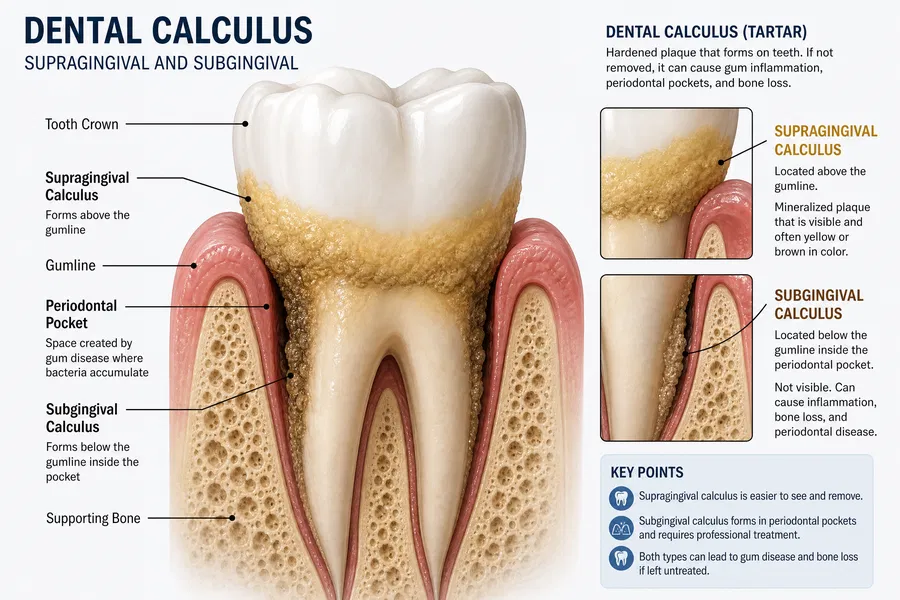
Tartar below the gum has been associated with inflammation and the progression of periodontal disease. However, bacterial biofilm and the body’s inflammatory response remain central to the disease process.
How Plaque Turns Into Tartar
The process usually happens in stages:
- Bacteria form a soft biofilm on the teeth.
- Plaque remains in areas that are difficult to brush or clean between the teeth.
- Minerals in saliva deposits become tartar or calculus.
- More plaque attaches to the rough surface
- The gums remain exposed to bacterial irritation
Plaque causes irritation, hardens into calculus, and the rough calculus surface makes it easier for more plaque to remain. Brushing twice a day and cleaning between the teeth can reduce new plaque buildup, but these habits cannot remove tartar that has already hardened.
What Happens Inside a Periodontal Pocket?
Healthy gum tissue usually fits closely around the tooth. When plaque bacteria cause ongoing inflammation, the gum can become red, swollen and less firmly attached to the tooth surface. The space is called a periodontal pocket.
A deeper pocket can trap:
- Bacterial plaque
- Food particles
- Tartar
- Blood and Inflammatory fluid
- Bacteria that are difficult to reach with home care tools.
The deeper the pocket becomes, the harder it may be to clean thoroughly at home. This can allow inflammation to continue and may eventually affect the tissues that support the tooth. Gum disease involves inflammation in the tissue surrounding and supporting the teeth. If plaque is not removed, it can harden into calculus and further irritate the gums.
How Tartar Can Affect Tooth Support
Tartar under the gums is not only a cosmetic concern because the inflammation continues, but it can also affect the tissues that hold the teeth in place. These supporting tissues include:
- The gum tissue
- The periodontal ligament
- The cementum covering the tooth root
- The bone surrounding the tooth
Long-term inflammation can contribute to deeper periodontal pockets, gum recession and loss of support around the tooth. In advanced cases, teeth may become mobile because the surrounding tissues and bone are no longer providing the same level of support. It’s important to understand that tartar is one part of a larger disease process. Bacterial biofilm, the body’s inflammatory response and individual risk factors can all contribute to periodontal damage.
What is Attachment Loss?
Attachment loss describes the loss of the normal connection between the gum and the tooth. Your gum tissue, periodontal ligament and surrounding bone work together to hold each tooth in position. When periodontal disease damages this attachment, the gum may move down the root or a deeper pocket may form around the tooth.
Attachment loss may be associated with:
- Deeper periodontal pockets
- Gum recession
- Exposed tooth roots
- Tooth sensitivity
- Reduced support around the tooth
- Tooth support in more advanced cases
Dr Angela Nguyen assesses the condition of the gums by checking for bleeding, measuring pocket depths and looking for signs of recession or tooth movement.
These findings help determine whether the problem is limited or has progressed to periodontitis.
Can Tartar Under the Gums Cause Bone Loss?
Untreated periodontal inflammation can contribute to the loss of bone that supports the teeth. Bone loss cannot usually be confirmed by looking at the gums alone, so dental X-rays may be recommended when clinically appropriate. The risk of bone loss can be influenced by several factors including:
- The depth of periodontal pockets
- The amount of inflammation
- Smoking or vaping
- Diabetes and other medical conditions
- Genetics
- Oral hygiene habits
- Previous gum disease
- How regularly professional maintenance is completed
Once bone has been lost, removing tartar does not rebuild it. However, professional periodontal treatment can help control inflammation and reduce the risk of further damage.
What Is Professional Periodontal Cleaning?
Professional periodontal cleaning removes plaque and tartar from areas that cannot be cleaned effectively at home. Depending on your gum health, treatment may include;
- Scaling above the gumline
- Removing tartar from inside periodontal pockets
- Cleaning the root surfaces
- Root surface debridement or root planning
- Local anaesthetic for sensitive or deeper areas
- Treatment over more than one appointment
Patients with deeper pockets or signs of periodontitis may need a more detailed periodontal cleaning plan. The gum disease treatment recommended will depend on the condition of your gums, the amount of tartar present and the level of support around your teeth.
How Dr Angela Nguyen Checks Your Gum Health
Dr Nguyen will take a complete gum assessment test first, which may include a review of your dental and medical history and examination of the gums and teeth. Measurement around the teeth using a periodontal probe, checking for any bleeding, swelling, pus, and assessment of gum recession. Checking whether any teeth are loose, reviewing existing dental x-rays and taking additional x-rays when needed.
There will be additional discussion around smoking, diabetes, medications, and home care habits. The depth of the periodontal pocket, the amount of bleeding and the condition of the bone all help create a clearer picture of your gum health.
With professional care and a consistent home care routine, it is possible to manage inflammation and protect the tissue that supports your teeth.
Book a periodontal assessment with Delatte Dental in Mansfield if you want to get rid of tartar buildup under the gums. The sooner it is checked, the more options you usually have. Book your consultation now!
Frequently Asked Questions (FAQs)
Q.1. Can brushing get rid of tartar under the gums?
No, brushing and flossing can help remove the soft layer of plaque and prevent future build-up, but they cannot get rid of tartar which has already formed.
Q.2. Does tartar under the gums hurt?
Tartar can be accompanied by sore or inflamed gums, but it does not necessarily hurt. Gum disease might not have any symptoms until an advanced stage; therefore, do not ignore any bleeding or persistent bad breath.
Q.3. Can subgingival tartar lead to gum recession?
Subgingival tartar may contribute to continuous gum inflammation. Periodontal disease is associated with gum recession, bone loss and decreased support around the teeth.
Q.4. Is periodontal cleaning the same thing as dental cleaning?
They might not be the same. A dental cleaning would usually target only the outer layer of the teeth, while a periodontal cleaning would include cleaning deeper gum pockets and the tooth roots.
Q.5. Can gum disease make your teeth loose?
Gum disease at an advanced stage may result in less bone and tissue support for the teeth, which will make them loose.
Q.6. Can lost bone from gum disease regenerate after treatment?
Lost bone does not usually regenerate after tartar removal.