
Preview: Issues like bleeding gums, bad breath, gum sensitivity, etc., can seem harmless at first, but they might indicate underlying gum problems. This guide breaks down how recognising these gum disease symptoms might help prevent more serious oral health issues later on.
The Australian Institute of Health and Welfare reports that gum disease is one of the most common oral health conditions affecting Australian adults. You might have noticed a little trace of blood on your toothbrush or in the sink after you spit. Your gums look slightly swollen or feel tender to the touch, and you brush your teeth, but still can’t get rid of the bad breath. You might think a little bit of blood and puffiness is just a part of life and not something worth calling a dentist about. This is how you invite gum disease symptoms that might turn into bigger issues later. In the early days, you don’t notice any pain or any obvious warning signs. But common symptoms include red or swollen gums, bleeding when brushing, bad breath, receding gums, sensitive teeth and loose teeth. Also note that gum disease is inflammation of the tissue surrounding and supporting the teeth. You may not feel the pain in the initial stages, which makes regular checks even more important.
This blog includes a detailed discussion of what signs to look for and also discusses why they are usually mistaken for something harmless.
What is a Gum Disease?
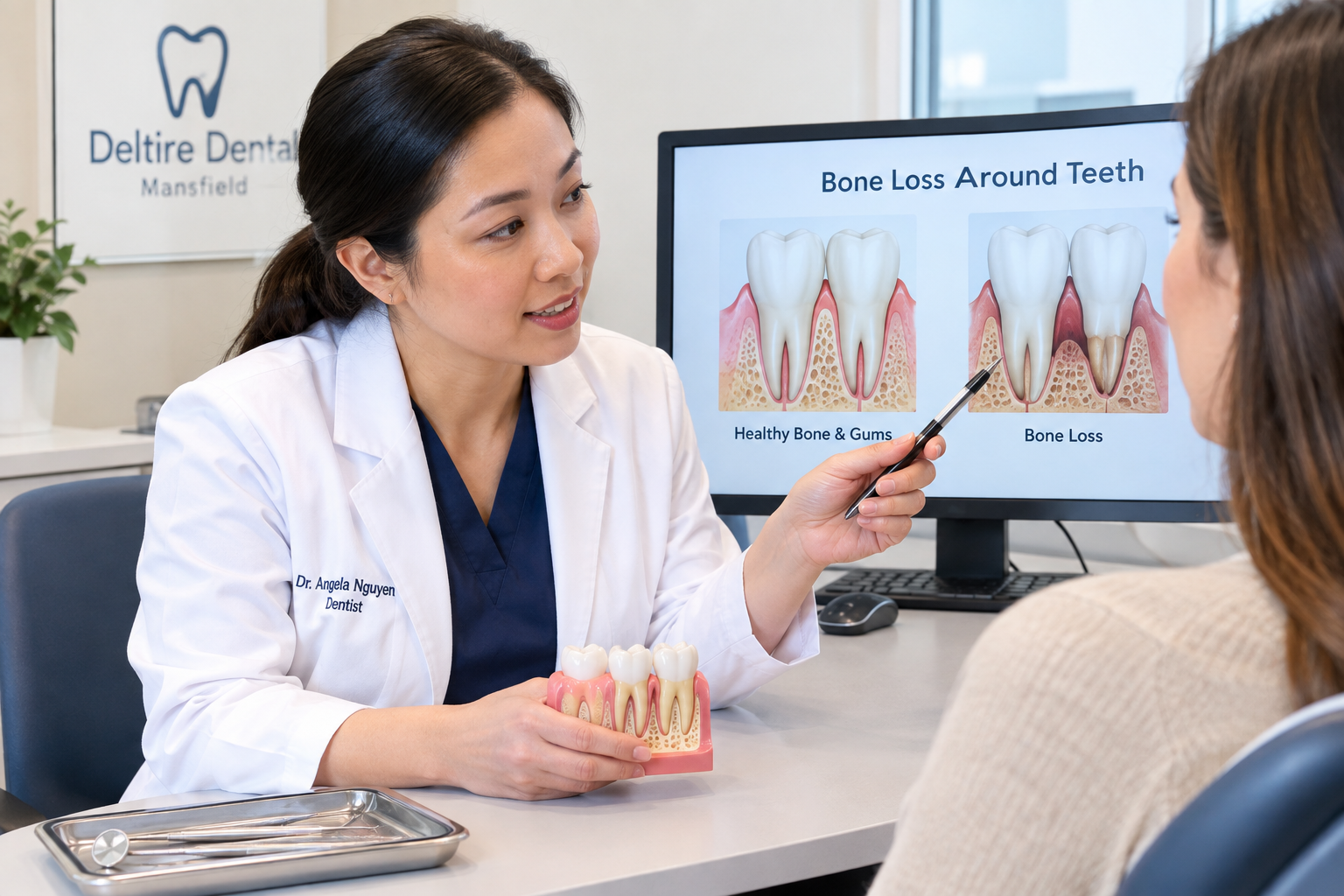
There is no single condition called gum disease, but the term covers different stages and severities from mild to severe. It usually starts as Gingivitis (early, mild stage), where only your gums are affected and swollen. If you ignore it for a long time, it can turn into periodontitis, which is more serious because it damages the bones and ligaments that hold your teeth in place. If you do nothing, the problem does not just go away, but the inflammation travels down, below the gum line. It causes your gum to pull away from your teeth (recession), creating pockets where bacteria multiply (infection) and finally destroying enough bone that your teeth become wobbly.
The NHS and Better Health Channel both list these gum disease symptoms (bleeding gums, swollen gums, bad breath, red gums, tenderness when biting) among the common list of symptoms.
Gum Disease Symptoms Most People Mistake for “Normal”
1. Bleeding gums
One of the more obvious signs of gum inflammation is bleeding gums. Many people think that it is normal to have bleeding gums, particularly if they brush their teeth hard or floss only occasionally. When your gums bleed regularly, that is not something to just file under “I probably brushed too hard.” It is worth paying attention to.
2. Swelling or redness
A healthy gum line will be firm and a shade pink. If they are swollen, puffy or red, that is a symptom of gingivitis. Both Better Health Channel and Healthdirect also list swollen and red gums as a common symptom.
Many people don’t realise it until they compare before and after pictures, or when their gums feel “different” as they brush. This is the subtle change that is usually the giveaway.
3. Persistent Bad Breath
Morning breath is one thing, but persistent, bad-smelling breath is something to be worried about. Bad breath or a bad taste in the mouth is one of the common signs of gum disease.
If brushing, flossing, and mouthwash are not fixing it, the problem could be deeper than the last big garlic meal.
4. Receding gums
If the gums recede, teeth will begin to appear longer. It usually progresses very gradually and may not be noticed until it shows obvious differences in the mirror or around the gum line.
5. Sensitive teeth
Sensitivity to cold, heat, or even touch can also be linked to gum disease. The recession and gum inflammation can expose the already protected areas.
How to Recognise That Tooth Symptoms are Getting Worse?
When gum disease symptoms start to appear, the initial symptoms tend to stay near the gum line. But as they progress over time, the signs can become more visible.
Losing Tooth: If you can wiggle a tooth with your tongue or finger, or it feels like it moves slightly when you bite, that’s a trouble sign. Healthy teeth stay in their positions.
Pain While Chewing: If you feel a sharp or dull ache when youtube down on a food or chew something, or if your gums feel sore where your teeth meet, it’s another red flag.
Constant Bad Taste: A constant metallic or sour taste in your mouth even after crushing usually points to infection or bleeding deep below the gum line. Gums that shrink (recede) make your teeth look longer than before.
Once gum disease symptoms start affecting tooth functions, the issue needs proper assessment. DO NOT procrastinate on calling your dentist when you notice these signs.
How Dentists Usually Treat Gum Disease
The common treatment regimen that dentists use to cure gum disease. The treatment depends on the severity of the condition. Better cleaning methods and the removal of plaque and tartar can make a great difference – especially in early cases. According to Healthdirect, it’s better to treat gingivitis early. ADA states that dental hygienists improve patients’ oral hygiene by cleaning teeth, fixing gum diseases, and educating patients about taking care of their teeth.
The treatment will depend on how advanced the gum disease is, and may involve deeper cleaning under the gums, maintenance visits and close monitoring. The purpose is to reduce the inflammation, eliminate the bacteria that are causing the issue and prevent further damage to the teeth.
The sooner the problem is taken care of, the easier it is to deal with. That’s the one thing that not many folks love to hear, yet it’s additionally the one thing that will prevent them from the problem later.
How To Protect Your Gums Long Term
As annoying as it is, the boring basics work best here.
Brush two times a day, clean between teeth and never miss regular check-ups. It is advisable to see a dentist regularly, and the sooner gum issues are identified, the better their chances of success may be.
Quitting smoking can make a significant difference for you if you have been a smoker. Smoking is one of the risk factors mentioned in the ADA’s list of conditions associated with more severe gum disease.
If you have diabetes or other health conditions, keeping them well-managed can also support oral health. Do not wait until the issue goes away on its own when gums are already receding or bleeding and are already tender.
Final Words
The key takeaway from the blog is that you need to keep track of these common signs as they might be indicating serious concerns. You’ll not wake up one day with advanced gum disease, but it takes months and years to develop, which we (human beings) tend to ignore. That’s why people can live with the gum disease symptoms for a while and still think everything is fine.
If you are in Mansfield, VIC, contact Delatite Dental for a check-up, advice or treatment planning. Our team can help you figure out what is going on with your teeth and what to do next.
Frequently Asked Questions (FAQs)
Q.1. Are bleeding gums a definitive symptom of gum disease?
While this symptom does not necessarily indicate gum disease, bleeding gums represent one of its most widespread manifestations that should alarm you. Both Healthdirect and the NHS emphasise the importance of watching out for any signs of gum disease, including bleeding during brushing, flossing, and eating hard food.
Q.2. Does gum disease necessarily hurt?
No. The earliest stages of gum disease are often painless, which explains why this disease can easily be overlooked. The NHS and Healthdirect both highlight the need to pay attention to early symptoms, which might go unnoticed by people who have not visited a dentist recently.
Q.3. What is the most typical symptom of gum disease?
Bleeding is considered the most apparent sign of the disease. However, redness, inflammation, and bad breath are also among the earliest Gum Disease Symptoms.
Q.4. Can gum disease influence other aspects of health?
Absolutely. The state of your mouth is closely related to your overall well-being, and Healthdirect stresses the need to take good care of it since poor oral health can be linked to many chronic diseases.0
Q.5. How widespread is gum disease in Australia?
According to the data provided by the AIHW, 30% of Australian adults aged 15 and over had moderate or severe periodontitis in 2017-18, and the rate increased with age.