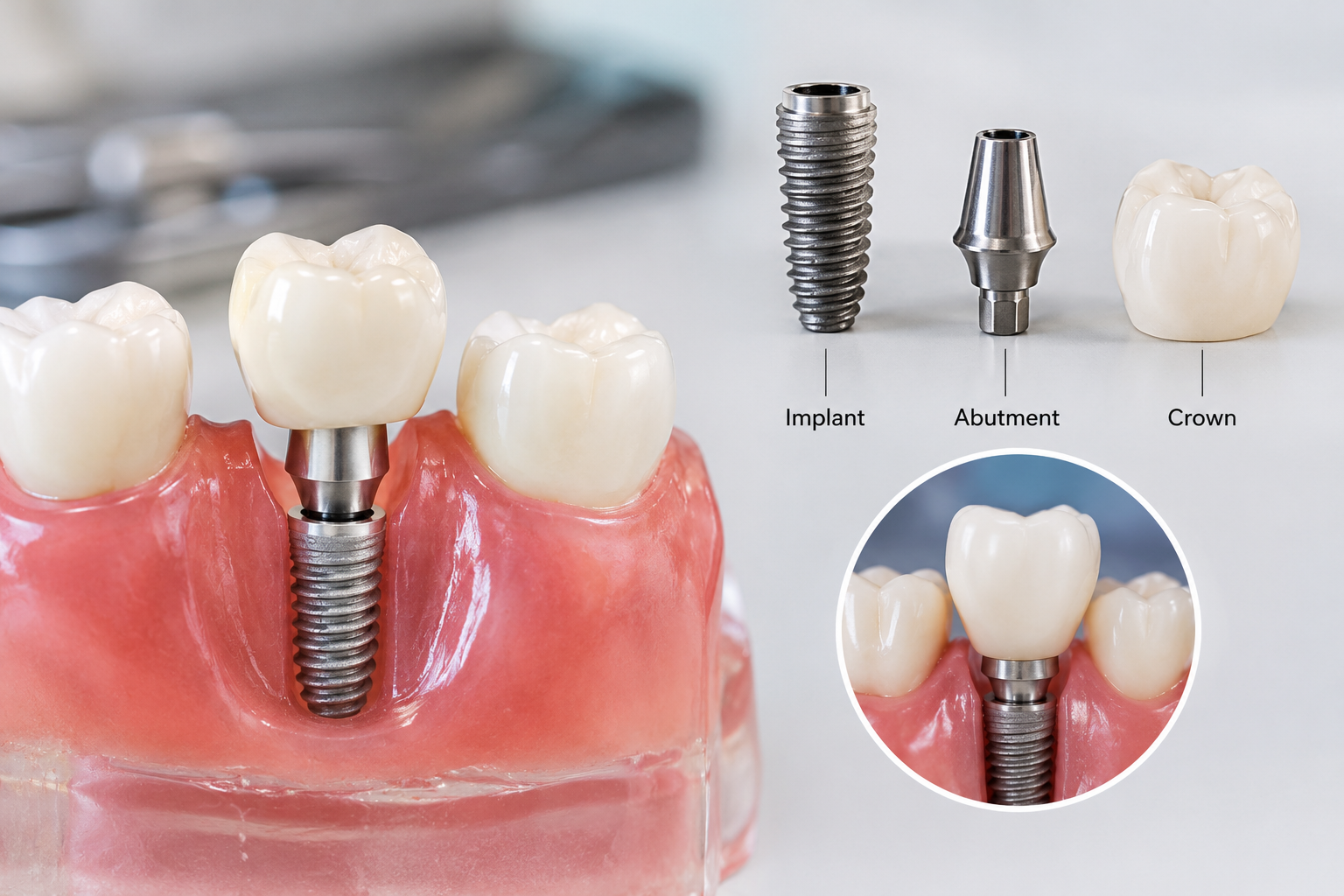

Even if you brush for a full two minutes, you can still leave nearly half of each tooth’s surface unclean. A toothbrush cleans the front, back, and chewing surfaces of the teeth, but its bristles cannot properly reach the narrow spaces between them. Those hidden spaces can collect plaque. Food particles and bacteria even when the teeth look clean in the mirror. So what’s the best way to clean between the teeth? Well, that depends on the size of the space between the teeth, the health of the gums, any existing dental work, and which tool a person can use regularly.
Dental floss, florets, interdental brushes, and water flossers can all help, but they are not equally suitable in every situation. Dr Mark Knapp explains how each option works, which ones may suit different patients, and how to clean between the teeth without harming the gums.
| Book an Appointment with Dr Mark Knapp Here |
What’s the Need for Cleaning Between the Teeth?
Cleaning the spaces between your teeth is an important part of daily oral care because those tight areas collect bacteria that a regular toothbrush usually can not fully reach on its own. It will help protect your teeth as well as gums from problems that develop whenever leftover debris sits around undisturbed for too long.
Plaque develops as a thin, sticky layer of bacteria that usually builds up between your teeth. It keeps building continuously as the day goes on from normal eating and drinking. Regular brushing with a toothbrush does a good job of clearing most of this film from the front, back, and chewing surface of your teeth. When plaque is not removed for too long, it creates conditions that can lead to a range of oral health issues over time. The bacteria in that sticky film produce substances that irritate the gums and damage the hard surfaces of the teeth. You need to address this in the early stages; cleaning between the teeth helps reduce the chance of these problems developing further.
Plaque can contribute to:
- Bleeding gums
- Gum inflammation
- Bad breath
- Tooth decay between the teeth
- Gum recession
- Periodontal pockets
- Tartar buildup
- Gum disease.
We advise people to clean between their teeth every day with dental floss or another appropriate tool designed for those spaces. This daily habit is suggested because it reaches the areas that toothbrushes leave behind and helps maintain healthier gums and teeth over a long time.
What Is the Best Way to Clean Between Your Teeth?
There is no single best option for everyone.
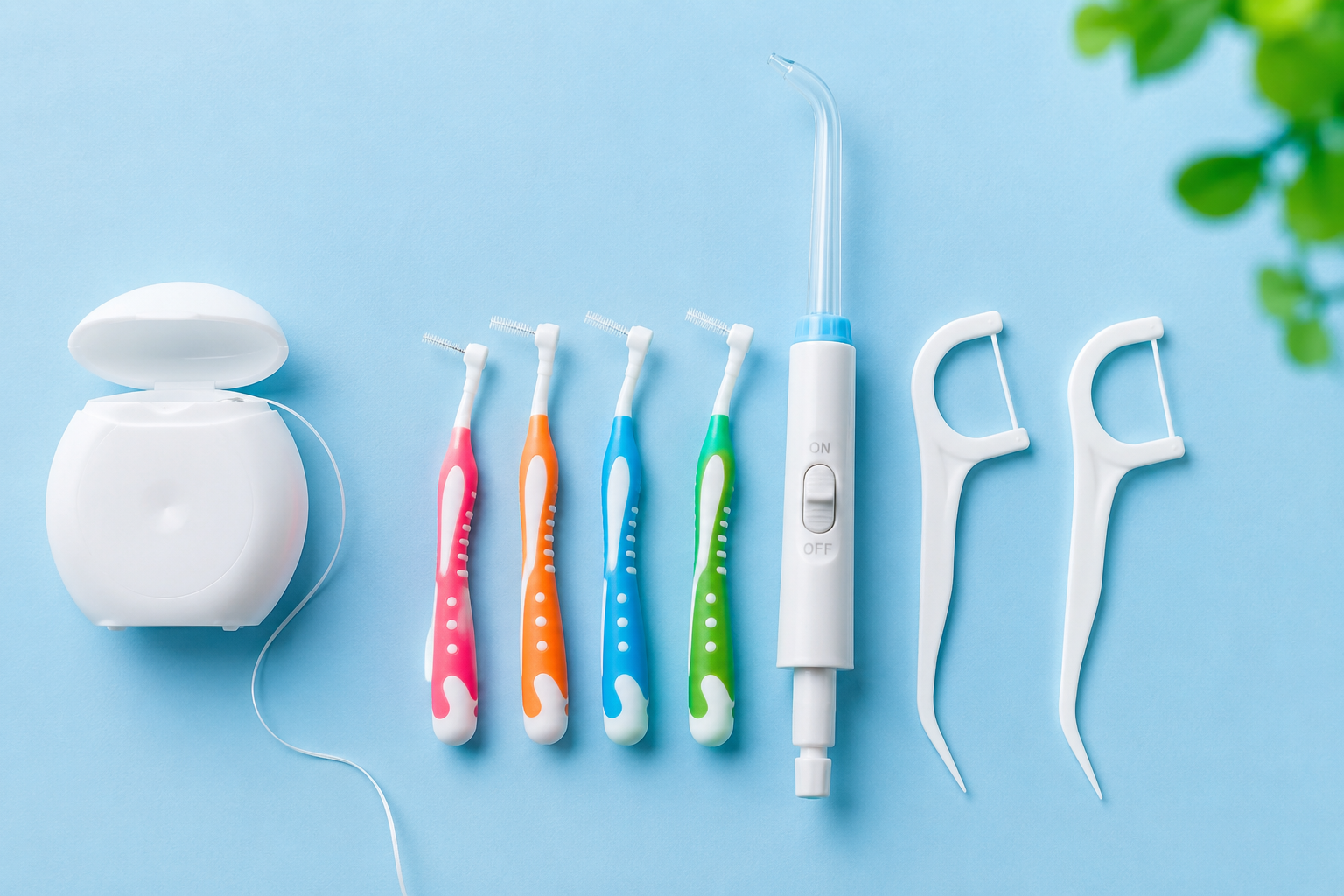
Dental Floss Might Be A Good Option If:
- Your teeth are tightly packed together
- The gaps are tight
- You can manage the floss effectively
- There are no big gaps or recession
- You are prepared to use it correctly.
Interdental Brushes May Be A Good Option If:
- You have small or medium gaps
- Your gums are receding
- You have periodontal pockets or bridges, implants, or orthodontic appliances.
- The floss is unmanageable
- You want something quick and simple.
A Water Flosser May Suit You If:
- You find that string floss is challenging to use
- You have braces or dental implants or a bridge
- Your fingers are stiff due to arthritis or other conditions
- You prefer water to string floss
- You need to remove food from hard-to-reach places
Flossettes May Be A Good Option For You If:
- You find that regular floss is challenging to use
- You need a larger handle to provide extra support
- You are cleaning a child’s teeth
- You want something simple and portable.
- The most suitable cleaning aid will remove plaque effectively, clean the targeted area, and be comfortable enough to use regularly.
Dental Floss (Best for Tight Spaces)
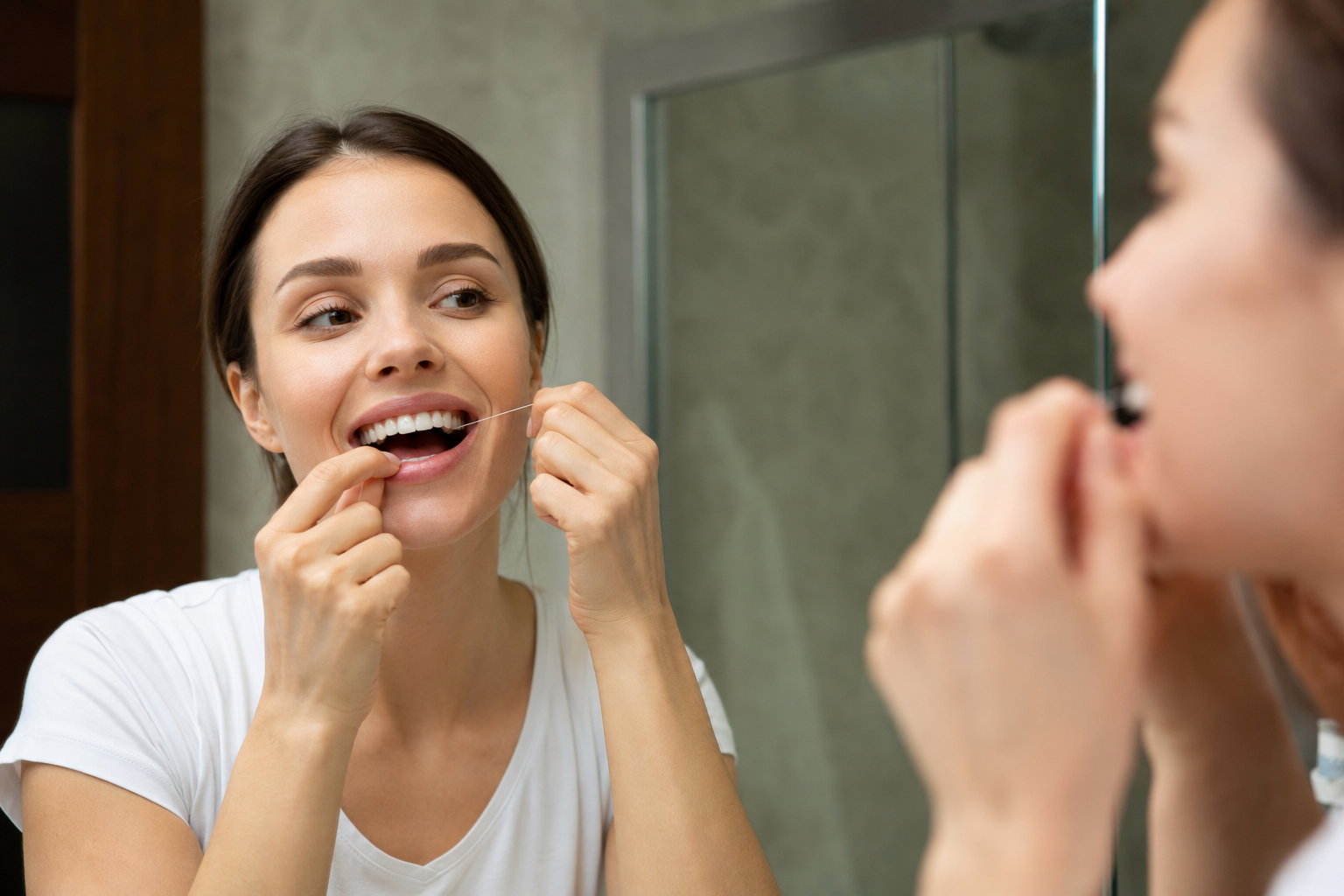
Dental floss is a fine strand of thread that is used to clean between teeth by gently inserting it between the teeth and sliding it up and down. It can also help remove plaque and food deposits from between your teeth, especially when an interdental brush is too big.
How To Use Dental Floss
- Use about 40–50 centimetres of floss or dental tape.
- Wind the majority of the floss around the middle finger of one hand, leaving a few centimetres dangling at each end.
- Wind the remainder of the floss around the middle finger of the other hand. Leave a few centimetres of space between your fingers and the windings.
- Hold the free ends of the floss between your thumbs and index fingers.
- Allow the floss to gently slide between your teeth, taking care not to snap it against your gum.
- Make a C-shape with the floss around the tooth, moving it up and down the sides of the tooth.
- Repeat this motion with the adjacent tooth.
- As you work your way around your mouth, use a clean section of floss.
Floss below the gum, but don’t push it too hard against the gums. You should try to gently guide the floss below the gum rather than snapping it there.
Common Flossing Errors
- Using the same piece of floss on all of your teeth
- Snapping the floss against the gum
- Only cleaning the front teeth
- Not rubbing the floss against both sides of each tooth
- Stopping flossing because the gums bled
- Flossing too roughly
- Using floss that is too thick for the space between the teeth.
When the gum is inflamed, the floss may bleed, but it is essential not to ignore persistent bleeding; if your gums bleed frequently, consult your dentist rather than simply applying more pressure while flossing.
Interdental Brushes (Useful for Wider Spaces)
Interdental brushes are small brushes that clean the spaces between your teeth. They come in many sizes; choose the smallest size that cleans the space comfortably.
They May Be Particularly Useful When:
- Your gums are receding
- Periodontal pockets have formed
- Food is getting trapped between your teeth
- You have a dental bridge
- Your gums are inflamed
- You have dental implants
- You have braces or periodontal pockets, and flossing is ineffective.
According to a 2019 Cochrane review, using interdental brushes and a toothbrush was more effective than using just a toothbrush alone for reducing plaque and gingivitis, and they may be more effective than flossing, although the evidence was not strong enough to conclude that they are significantly better than other methods.
How To Use An Interdental Brush
- Select the appropriate size to comfortably clean the space.
- Hold the brush between the thumb and index finger.
- Gently insert the brush into the space between your teeth.
- Avoid forcing the brush if the space is too tight.
- Move the brush in and out several times.
- Clean each side of the space between your teeth if possible.
- Remember to rinse the brush during use.
- If the brush becomes frayed or bent, replace it with a new one.
The brush should clean the space between your teeth without causing discomfort. The cleaning process may cause some bleeding if your gums are inflamed, but seek professional advice if the bleeding persists.
Flossettes ( A Convenient Flossing Option)
Flossettes offer a practical alternative for people who find traditional string floss awkward or hard to manage during routine flossing. A flossette is a small plastic tool that keeps a short length of dental floss stretched tightly between two tiny prongs at the end of a convenient handle. Many people find a rosette simpler to handle than regular string floss because the short piece stays firmly in position and does not require the same finger coordination. This makes the tool particularly helpful for certain groups who struggle with the dexterity needed for traditional flossing. The handle design gives better grip and control during the cleaning process.
Water Flossers
Water flossers provide another helpful option for cleaning between teeth and along the gumline by using a gentle stream of water instead of traditional floss. These devices can be especially useful for people whose dental work or physical limitations make string floss difficult. A water flosser is a device that directs a focused, adjustable jet of water into the spaces between teeth and along the edge of the gums. The moving water helps dislodge food particles and loosen plaque that has collected in those areas. This method offers a different way to reach the same hard-to-clean spots that string floss targets. Water flossers can be particularly beneficial for certain individuals whose oral situations make traditional flossing less practical or comfortable. The gentle water stream works well around various types of dental work and for those with limited hand strength or coordination.
Floss or Interdental Brushes?
The choice depends mainly on the space between your teeth and your ability to use the tool effectively.
| Situation | Option that may be suitable |
| Very tight contacts | Dental floss or dental tape |
| Small open spaces | Small interdental brush |
| Larger spaces from gum recession | Larger interdental brush |
| Braces | Interdental brush, floss threader or water flosser |
| Bridges | Interdental brush, floss threader or water flosser |
| Dental implants | Interdental brush or water flosser, based on professional advice |
| Limited hand movement | Flossette or water flosser |
| Food frequently trapped | Interdental brush or water flosser |
| Gum disease or periodontal pockets | Professionally selected interdental brushes and other recommended aids |
How to Build an Effective Interdental Cleaning Routine
A simple routine is more likely to become a habit.
Consider these suggestions when developing a cleaning routine.
Step 1: Choose One Convenient Time Of Day
Many people find that it is easiest to clean their teeth in the evening so that plaque and food particles are removed before bed. Alternatively, select another time of day that suits you.
Step 2: Begin With The Easiest Places To Reach
If the whole mouth is quite challenging to clean, start with your front teeth and gradually move to the back teeth. The point is to develop the technique so that it becomes fully integrated into your oral hygiene routine. Avoid skipping the difficult spots just because they seem uncomfortable.
Step 3: Clean Both Sides Of Each Tooth
It is not enough to simply move a floss or an interdental brush from one side of a space between teeth to the other side. It is necessary to make sure that both sides are properly cleaned. Try to reach each surface.
Step 4: Be Gentle
Forcing can damage delicate gum tissue. Avoid snapping floss against the gum and trying to push an interdental brush deeper into a narrow space.
Step 5: Follow With Toothbrushing
According to Healthdirect Australia, it is recommended to floss at least once a day, and cleaning interdental spaces before brushing helps remove plaque and food particles from teeth that brushing may not be able to reach.
Step 6: Give Your Gums Time To Settle
If gums bleed due to inflammation, gentle cleaning techniques may help reduce this effect. However, if bleeding persists, consult a dentist at the earliest opportunity.
How Dr Mark Knapp Can Help You Choose
The best way to clean between the teeth is not necessarily the most expensive.
Or complicate adoption. It is the tool that fits the space between your teeth, reaches the area a toothbrush cannot clean, and can be used gently every day. For some people, that tool is dental floss. For others, interdental brushes, floss sets, or water flossers may be more practical.
If you’re unsure which option to use, Dr Mark Knapp can examine your gums and teeth and identify the areas that need more attention. Book an appointment if your gums bleed regularly, food keeps getting trapped, or you are unsure whether your current cleaning routine is working.
| Click Here to Make a CALL |
Frequently Asked Questions (FAQs)
Q.1. Can I use an interdental brush every day?
An appropriately selected interdental brush can be used once a day. Moreover, it should not be forced into place so as not to injure the gums. To select the right size brush, it is best to consult a dentist or hygienist.
Q.2 Is a water flosser enough?
A water flosser can be used as an alternative way to clean interdental spaces and is especially useful when braces, dental implants, or bridges are present. Nevertheless, a water flosser cannot replace all other tools, so it is best to consult a dentist.
Q.3. Can toothpicks help to clean interdental spaces?
Toothpicks may cause damage to the gums since they have to be pushed into the interdental space. Wooden toothpicks should not be used since they may split and damage the delicate gum tissues. Moreover, toothpicks are not always effective enough at removing dental plaque. It is better to use floss, an interdental brush, or a water flosser.