
Raise your hand if, growing up, the only dental advice most people got was to brush twice a day and not eat too much sugar. Which is roughly only 10% of what you actually need to know about keeping your teeth perfectly fine for the next several decades. You get an instruction manual for a toaster, you even get one for a kettle, but no one gives you an owner’s manual for your adult teeth. They just come and stay with you for a long, long time unless they chip or crack, and you’ll have no choice but to go see a dentist. Because most people treat their teeth like they treat their car: ignore it until it gets worse. Then spend a fortune fixing it, when they would have spent just maintaining it.
This guide is that missing manual you never got to have. Take a practical look at how your teeth change during your 20s, 30s and 40s.
How Many Adult Teeth Do You Have?
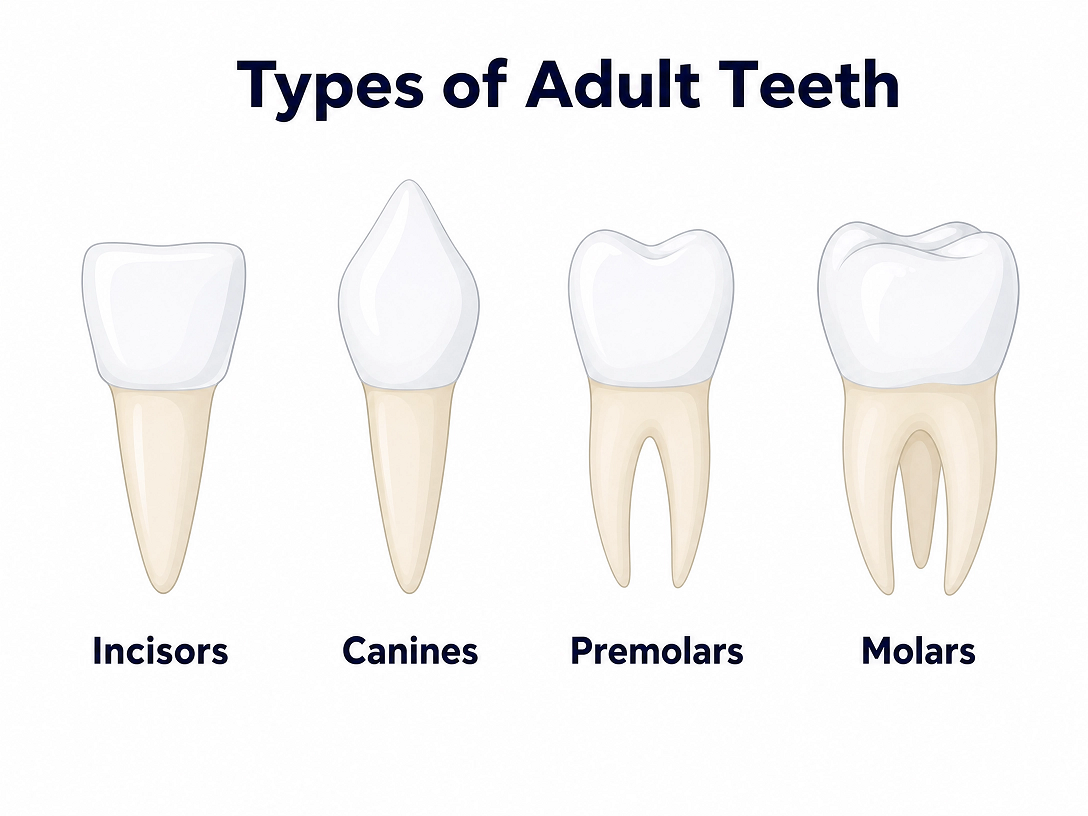
Most grown-ups have 32 teeth in total, including the wisdom teeth at the back. That usually includes:
- 8 Incisors (front teeth used for biting & cutting food)
- 4 Canines (pointed teeth next to the incisors used for tearing food)
- 8 Premolars (teeth used for crushing and grinding food)
- 12 Molars (back teeth used for heavy grinding and chewing)
But not every adult ends up having all of them. Some people never get wisdom teeth at all, and some get them removed by dentists. Some adults have fewer teeth because of accidents, tooth decay, gum disease, or previous dental work. Even though 32 is the normal number, many adults do not match the textbook version. Having fewer than 32 teeth is completely normal for many people. The number of teeth is not important anyway; what matters most is if the teeth you do have are working properly or not. Adult teeth are designed to chew food, bite, tear, and keep proper space in the jaw. Teeth also help hold the shape of your face and keep your bite balanced when you chew. When one tooth is lost or changes, the other teeth usually have to adjust accordingly. So if you force your teeth to do something more than chew on food, you might have some problems.
Late Arrivals of Wisdom Teeth
Wisdom teeth have a bit of a bad reputation as they are the least predictable teeth in the adult mouth. They do not have to follow any fixed age number and can arrive at any point in adult life. They usually come in the late teens or early twenties. However, some people never get them, and not every wisdom tooth causes problems. You might have heard people complaining and crying about how their wisdom tooth took forever to appear and when they did, it was painful. But sometimes they just come in straight and do not cause any issues. But others get stuck in the way and only partially erupt, or make it hard to clean the back of the mouth. You might find it very hard to chew food at times and even cause a headache or fever. Wisdom teeth are the last teeth to appear… like celebrities, and sometimes they do behave like they did not get the message about proper positioning.
Usually, not everyone needs to get their wisdom teeth taken out. However, when they cause pain, make cleaning difficult, or start affecting the neighbouring tooth, they need to be checked by a dentist.
What Adult Teeth Are Made Of?
Every tooth is made of different layers, and each layer has its own specific purpose.
The outer layer that people see first is called enamel. Enamel is the hard, shiny outer coating of the tooth. And it’s actually the hardest material on the entire human body. However, it is also important because once enamel is gone or damaged, it does not grow back. This is why biting, drinking, grinding, cracks, or acid from food and drinks can permanently affect the tooth. Below the enamel is a layer called dentine. Dentine is softer than enamel and has very small tubes that can transmit feelings like pain or sensitivity. This is why when dentine becomes exposed, teeth can feel sensitive to cold, heat, sweet things or pressure. The innermost part of the tooth is called the pulp. The pulp contains the nerves and blood vessels of the tooth. When the pulp becomes inflamed or infected, the tooth usually starts causing noticeable pain or discomfort instead of staying quiet.
| Part of the Tooth | What It Does |
| Enamel | The hard outer layer that protects the tooth |
| Dentine | The layer underneath enamel that supports it |
| Pulp | The soft inner tissue with nerves and blood vessels |
| Root | The part that holds the tooth in the jaw |
| Cementum | A thin layer that helps cover the root |
Did You Know?
Enamel is the hardest tissue in the human body, but it still wears down over time.
How Adult Teeth Change Throughout The Years
If you’re thinking once your adult /permanent teeth come in, that’s it, case closed. But not quite. Adult teeth are constantly under stress from chewing food, hot and cold temperatures, acids in drinks and food, teeth grinding, clenching, and normal daily use. In addition, the gums and bone that support the teeth can also change as you get older. Adult teeth do not stay the same; they age and change along with the rest of the body. Some of these changes happen slowly and are not very noticeable at first. Other changes only become clear when a tooth chips, a filling breaks down, or a dentist notices something new during the examination. It might not always be a sign of serious problems. Sometimes it is simply the natural result of using the teeth every single day.
Which Parts of the Mouth Help Teeth Stay in Place?
Adult teeth do not function on their own but rely on the surrounding tissues to stay healthy and in place. The gums form a protective seal around each tooth to keep bacteria and food out. The jawbone holds the roots of the teeth firmly in place. The periodontal ligament is a thin layer that works like a small cushion between the tooth root and the jawbone. It helps absorb pressure from chewing. Saliva washes away food particles, neutralises acids in the mouth and helps protect the outer layer of the teeth. If any of these supporting systems are stressed or damaged, the teeth will usually start showing signs of trouble. A tooth may crack because of teeth grinding or clenching, or become sensitive because the gums have pulled back and exposed the root. A tooth may feel loose because the bone holding it in place has become weak. So it’s a possibility that problems may be in other parts of the mouth, but it might end up revealing itself through the tooth.
How Things Change with Eroded Enamel
The tooth’s protective layer, enamel, may become thinner with time. This process happens due to grinding, acid consumption, and general wear and tear of the tooth. And once the enamel is thinner, the dentine becomes exposed more easily since dentine is way more sensitive.
That’s when people start complaining about such things:
“Always feel cold with one tooth.”
“I feel some roughness on this side.”
“My teeth have become shorter in comparison to before.”
“My bite is different now.”
They’re not random comments at all. They might be the symptoms of wear on your teeth.
How to Save Your Adult Teeth Simply
When the pressure on adult teeth is controlled rather than neglected, they live much longer.
Generally, that means:
- Using a mouthguard while doing sports.
- If grinding happens, using a night guard.
- Maintaining the level of plaque with brushing and cleaning interdental spaces.
- Replacement of fillings which became old and damaged.
- Reducing the frequency of acid intake from liquids and food.
- Visiting a dentist if a tooth becomes uncomfortable, not after months.
Why Do Gums Recede?
Gum recession happens when the gum tissue gradually moves away from the teeth. This makes the teeth look longer and shows more of the root that is normally covered. It can be caused by several things like gum disease, brushing too hard, grinding teeth, or having naturally thin gums. Teeth grinding, also known as bruxism, is often connected to stress or anxiety, which can slowly wear down the teeth. When gums recede, the exposed root is more sensitive and prone to decay. This is because the root does not have the hard enamel protection that the top part of the tooth has. This is why cold drinks can suddenly feel much more painful or sharp after a recession starts. The tooth is losing some of the protection it used to have. Gum recession usually happens slowly and starts getting worse over time, so it’s easy to not notice it at first.
Did You Know?
Bruxism can happen during the day or while sleeping. Many people only learn they grind their teeth after a dentist notices the wear pattern or through a loved one.
Protect Your Smile With Delatite Dental in Mansfield
Adult teeth go through a lot over the years. They wear down, keep shifting around, crack, recede, and respond to the way you treat them. Most of these changes happen gradually, so they are easy to overlook until some big issue comes along the way. This is another reason why going to the dentist regularly is important. So yeah, it would have been nice if these teeth came with a manual. Since they don’t, it’s totally up to us to take every step with caution.
Your adult teeth are meant to last for decades, but they still need the proper care along the way. Whether it’s a routine check-up, concerns about root, grinding or wisdom tooth issues, Delatite Dental are Australia’s best smile maker. Book an appointment today and keep your smile healthy for years to come.
Frequently Asked Questions (FAQs)
Q.1. Can adult teeth heal if they sustain damage?
They cannot heal completely; the enamel that is damaged will not regenerate. Only minor damage, such as decay, may be improved with the use of fluoride treatments, while chips, cracks, and worn enamel should be treated by a dentist.
Q.2. Why is there roughness in teeth despite daily brushing?
It might indicate the presence of plaque, tartar, worn enamel, or tiny chips in the enamel. If the roughness persists despite brushing, a dentist might want to examine your teeth to determine its cause.
Q.3. Can teeth move in adults?
Yes. Teeth tend to move slowly over time due to ageing, teeth grinding, loss of teeth, gum disease, or a change in bite. It happens even to those individuals who have never worn braces in their life.
Q.4. Why do my teeth look longer now than before?
The teeth themselves do not become longer; rather, gums recede gradually, leaving more teeth exposed than before.
Q.5. Is it possible for enamel to grow back after it wears out?
No. Enamel is the hardest tissue in the human body, but it doesn’t have regenerative abilities. Therefore, taking care of it and preventing its wear out is crucial.
Q.6. Why do dentists always ask me whether I grind my teeth?
Teeth grinding, which may be completely unconscious and occurs during sleep, is a common condition. Dentists are able to detect worn-out teeth, cracks, or tightness in jaw muscles even before patients realise their condition.
Q.7. Does aging weaken my adult teeth?
No. Healthy adult teeth can last forever. Yet, long-term chewing and grinding, dental work done long ago, gum disease, or enamel wearout may put your teeth at risk of cracking or becoming sensitive.
Q.8. Can damage to one tooth influence my entire mouth?
Yes. The damaged or lost tooth changes the way you bite, food gets stuck, and extra pressure falls on your adjacent teeth. Solving the problems in the early stages prevents other complications.